

In premium design, loud logos are often seen as "cheap." The world’s most sophisticated brands—think of top-tier automotive interiors or professional creative tools—are moving toward Stealth Branding.
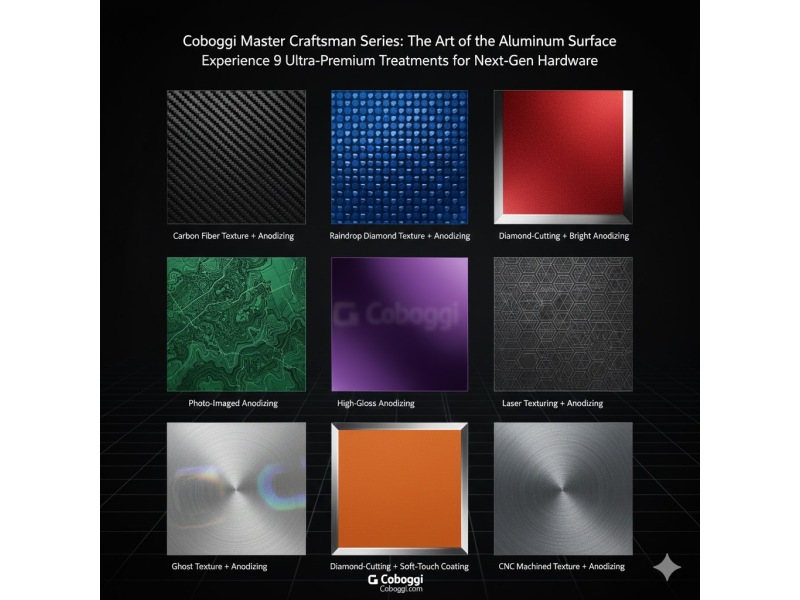
The most effective tool in this movement is Ghost Texture. It is a finish that doesn't scream for attention; instead, it rewards the user for looking closely. At Coboggi, we achieve this by manipulating the way light scatters across the anodized surface.
1. What is Ghost Texture?
Ghosting is the process of creating a topographical difference on the metal surface that is so slight (often less than 10μm) that it cannot be felt by the finger, but it can be seen by the eye.
The "Now You See It" Effect: In direct light, the surface looks like a uniform, matte finish.
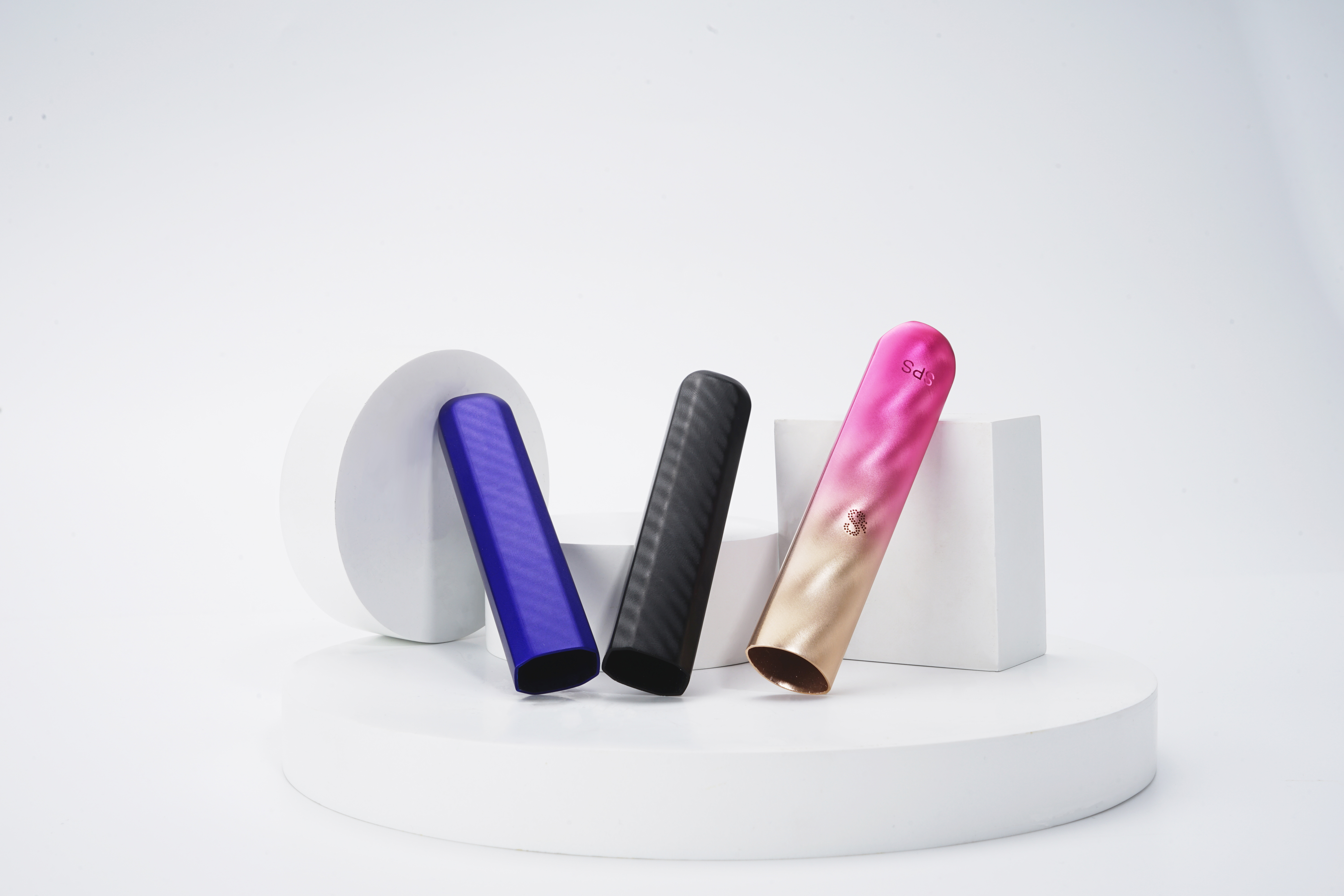
The "Ghost" Reveal: When the device is tilted at an angle, the difference in light refraction reveals the texture, logo, or pattern.
2. The Technical Execution: Laser vs. Chemical
There are two primary ways Coboggi creates the Ghost effect:
Laser Micro-Texture: We use a high-precision fiber laser to slightly "rough up" or "re-melt" a specific area of the aluminum before the final anodizing. This change in surface porosity causes that specific area to absorb dye differently, creating a permanent, ghostly contrast.
Differential Sandblasting: We use a high-resolution mask (stencil) to hit the aluminum with two different types of media (e.g., fine glass beads vs. ceramic grit). This creates two different "Gloss Levels" on the same piece of metal.
3. Why Pair it with Anodizing?
Anodizing is crucial because it "locks in" the texture. Because the ghosting is etched into the metal and then covered by the aluminum oxide layer, it is:
Permanent: Unlike printed logos, it will never rub off or fade.
Seamless: There is no "edge" or "step" that catches dust or grime.
Color-Matched: The logo is the same color as the body—the contrast comes purely from light physics, not ink.
4. Design Use Cases
Regulatory Icons: Hide "FCC" or "CE" marks on the bottom of a device so they don't clutter the design, yet remain readable for legal compliance.
Anti-Counterfeit: Subtle ghost patterns are incredibly difficult to replicate without the exact laser parameters, acting as a "DNA" for your product.
Haptic Guides: Using a ghost texture on a trackpad or button area to give a "visual hint" of where to touch without adding physical bumps.
5. The "Black-on-Black" Challenge
Ghosting is most difficult—and most beautiful—on Space Grey and Matte Black finishes. It requires a perfect balance of "Etch Time" and "Anodizing Depth." If the anodizing is too thick, it drowns out the texture; if it's too thin, the ghosting looks like a scratch.
Conclusion: The Luxury of Subtlety
Ghost Texture is for the brand that is confident enough not to put its name in bright colors. It is an "Easter Egg" for the consumer—a secret detail that proves the manufacturing was handled with extreme care.
 English
 German
 French
 Russian
 Spanish
 Japanese
 Korean
 Khmer
Khmer Portuguese
 Ukrainian
 Arabic
 Italian
 Afrikaans
 Albanian
 Armenian
 Azerbaijani
 Basque
 Belarusian
 Bulgarian
 Catalan
 Croatian
 Czech
Czech Danish
 Dutch
Dutch Estonian
 Filipino
 Finnish
 Galician
 Georgian
 Greek
Greek Haitian Creole
 Hebrew
 Hindi
Hindi Hungarian
 Icelandic
 Indonesian
 Irish
Irish Latvian
 Lithuanian
 Macedonian
 Malay
Malay Maltese
 Norwegian
 Persian
 Polish
 Romanian
 Serbian
 Slovak
 Slovenian
 Swahili
 Swedish
 Thai
Thai Turkish
 Urdu
Urdu Vietnamese
 Welsh
Welsh Yiddish