

For an outdoor device like a smart doorbell, the environment is a constant battleground.
Between torrential rain, morning dew, and humidity, water is always trying to find a way inside. An IP68 rating—meaning the device is dust-tight and can withstand continuous immersion in water—is the gold standard of reliability.
But an IP68 rating isn't something you can just "add" to a product; it must be engineered into the chassis. At Coboggi, we believe the secret to waterproofing isn't just the rubber seal—it's the precision of the aluminum that holds it.
1. The Plastic Problem: Why Seals Fail
Most waterproof failures in smart home devices happen because the housing warps.
The Issue: Plastic enclosures expand and contract significantly with temperature changes. Over time, or under direct sunlight, a plastic frame can slightly "bow." Even a gap of 0.1mm is enough for capillary action to pull moisture into the circuitry.
The Aluminum Solution: Aluminum is dimensionally stable. It maintains its shape across extreme temperature ranges, ensuring that the pressure on the waterproof gaskets remains constant 365 days a year.
2. The O-Ring Groove: Where Precision Wins
The most common way to achieve IP68 is through an O-ring or a custom silicone gasket. However, a seal is only as good as the "seat" it sits in.
The CNC Advantage: At Coboggi, we use high-precision CNC milling to create the O-ring groove. By maintaining a ±0.01mm tolerance on the groove depth and width, we ensure the gasket is compressed exactly 20–30%—the "sweet spot" for a permanent waterproof seal.
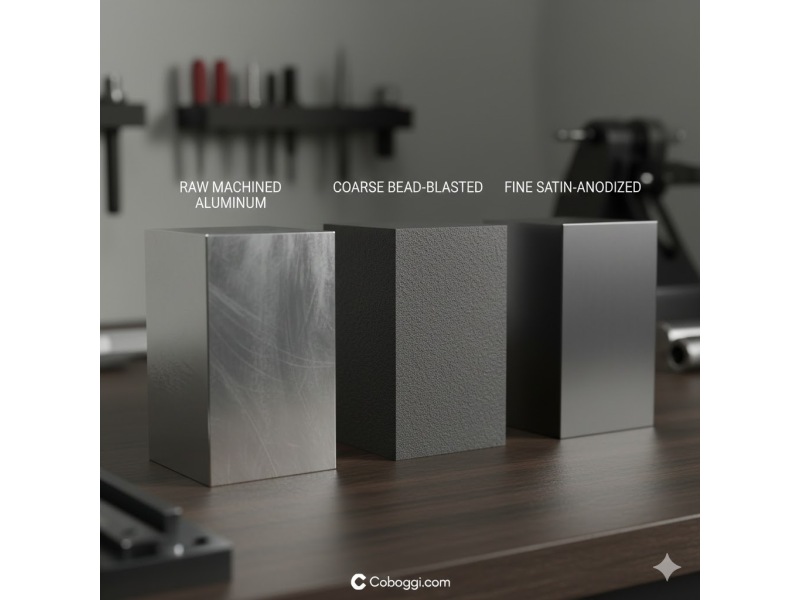
Surface Finish at the Interface: If the metal surface inside the seal groove is too rough, water can "snake" through the microscopic peaks and valleys. We optimize the Ra (Surface Roughness) at the sealing interface to ensure a glass-smooth contact point.
3. Managing the "Breathing" Effect
Every sealed device "breathes" as internal air heats up and cools down. This creates a vacuum effect that can actually suck water through the seals.
The Coboggi Approach: We design integrated mounting points for ePTFE pressure vents (like GORE-TEX). These allow air to pass through to equalize pressure while blocking liquid water, ensuring the aluminum housing doesn't undergo unnecessary stress.
4. Threaded Precision & IP Ratings
For smart doorbells, the entry points for screws and cables are the highest risk areas.
Machined Threads: Unlike "self-tapping" screws in plastic which can strip or create gaps, we machine precision threads into the aluminum. This allows for high-torque assembly, ensuring the two halves of the housing are clamped together with uniform pressure, sealing the gasket perfectly.
Conclusion: Engineering for the Storm
An IP68 rating is a promise of quality to your customers. By utilizing the rigidity and precision of a Coboggi aluminum enclosure, you ensure that your smart doorbell remains functional whether it’s facing a summer heatwave or a winter storm.

 English
 German
 French
 Russian
 Spanish
 Japanese
 Korean
 Khmer
Khmer Portuguese
 Ukrainian
 Arabic
 Italian
 Afrikaans
 Albanian
 Armenian
 Azerbaijani
 Basque
 Belarusian
 Bulgarian
 Catalan
 Croatian
 Czech
Czech Danish
 Dutch
Dutch Estonian
 Filipino
 Finnish
 Galician
 Georgian
 Greek
Greek Haitian Creole
 Hebrew
 Hindi
Hindi Hungarian
 Icelandic
 Indonesian
 Irish
Irish Latvian
 Lithuanian
 Macedonian
 Malay
Malay Maltese
 Norwegian
 Persian
 Polish
 Romanian
 Serbian
 Slovak
 Slovenian
 Swahili
 Swedish
 Thai
Thai Turkish
 Urdu
Urdu Vietnamese
 Welsh
Welsh Yiddish