

I. Introduction: The Enclosure Imperative
In the world of electronics, the enclosure is often an afterthought, viewed simply as the "box" that contains the sensitive components. However, for serious industrial, medical, and aerospace applications, the enclosure is a critical performance component—it dictates the device's lifespan, thermal efficiency, and electromagnetic compatibility (EMC).
This is where aluminum has secured its reputation as the gold standard. It offers an unparalleled balance of thermal, structural, and electromagnetic properties. This guide is designed to help engineers and procurement specialists navigate the complexities of aluminum alloys, specifically focusing on how to select the precise material to ensure your OEM/ODM project meets its most stringent technical requirements.
II. Why Aluminum is the Gold Standard for Electronics
Aluminum alloys are favored over steel or plastic for electronic housings due to several synergistic properties:
A. Thermal Management (Heat Dissipation): Electronic components generate heat, which is the primary cause of system failure. Aluminum's high thermal conductivity (especially 6061 ≈ 167 W/m*K) allows the enclosure itself to act as a heat sink, efficiently drawing thermal energy away from the internal components and dissipating it into the environment.
B. EMI/RFI Shielding (The Faraday Cage): Modern environments are saturated with radio frequency (RF) and electromagnetic interference (EMI).As a highly conductive metal, aluminum inherently forms a Faraday Cage, effectively blocking external interference from disrupting sensitive circuitry and preventing internal noise from leaking out.This is a non-negotiable requirement for compliance in industries like Telecom and Medical Devices.
C. Strength-to-Weight Ratio: In applications ranging from handheld diagnostics to satellite equipment, weight is a critical factor. Aluminum offers a fantastic strength-to-weight ratio, providing robust protection against impact and vibration while being significantly lighter than steel.
D. Natural Corrosion Resistance: When exposed to air, aluminum spontaneously forms a thin, tough layer of aluminum oxide Al2O3 on its surface. This passive layer acts as a natural protective barrier against corrosion, which can then be enhanced through subsequent finishing processes.
III. Deep Dive: Key Aluminum Alloy Series for Enclosures
The vast majority of electronic enclosures are fabricated from alloys in the 5000 or 6000 series, each optimized for different manufacturing methods and application demands.
A. The 6000 Series (Magnesium and Silicon): The Machining Workhorse
The 6000 series, particularly 6061-T6, is the most commonly specified general-purpose aluminum alloy. Its popularity stems from its unique ability to be heat-treated (T6 temper), achieving a high ultimate tensile strength (~310\MPa), which is critical for structural integrity.
Ideal for: Enclosures fabricated via CNC machining or extrusion. Its elemental composition allows for excellent chip break, yielding superior surface finishes (low Ra values) and minimizing tooling wear—a vital factor in precision manufacturing.
Key Property: High strength and superior machinability.
B. The 5000 Series (Magnesium): The Sheet Metal Specialist
The 5000 series alloy 5052-H32/H34 is a non-heat-treatable alloy that gains its strength through work hardening (H-tempers). Its defining characteristic is its high content of magnesium, which makes it an exceptional choice for demanding environmental and fabrication requirements.
Ideal for: Enclosures fabricated via sheet metal forming, bending, and welding.
Key Property: Superior weldability and excellent resistance to corrosion, especially in moisture-laden or saltwater environments, making it the preferred choice for outdoor utility boxes and marine electronic gear. Its higher fatigue strength also makes it robust against repeated vibration and cyclic loads.
IV. Critical Selection Factors: 6061 vs. 5052 Comparison
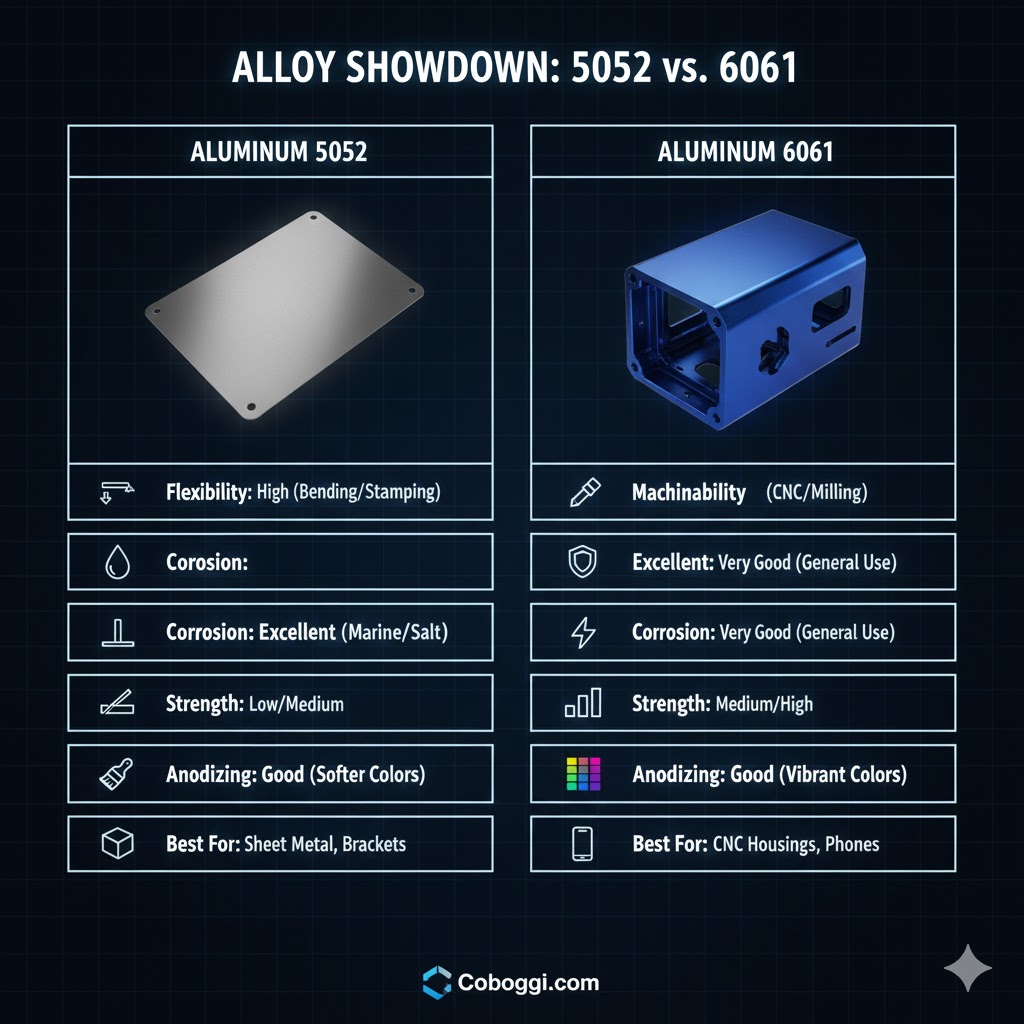
While hundreds of aluminum alloys exist, for electronic enclosures, the decision often narrows down to the 6061 and 5052 series. The "best" choice is not about superior strength, but about aligning the material properties with the manufacturing process, application environment, and cost targets.
| Factor | 6061 Aluminum (T6 Temper) | 5052 Aluminum (H32/H34 Temper) | Selection Insight |
| Primary Strength | Higher (Yield Strength ~276\MPa ) | Moderate (Yield Strength ~ 193 \MPa) | Choose 6061 for high-stress structural parts. |
| Machinability | Excellent (Favorable chip break) | Fair to Poor (Gummy, higher tooling wear) | Choose 6061 for complex CNC machining. |
| Weldability | Good, but strength loss in HAZ; requires heat treatment post-weld. | Superior (Best weldability of common alloys) | Choose 5052 for welded sheet metal assemblies. |
| Corrosion Resistance | Good, but inferior to 5052 in chloride-rich environments. | Excellent (Due to higher Mg content) | Choose 5052 for harsh, outdoor, or marine use. |
| Thermal Conductivity | Higher ~167 \W*m} \ K | Lower ~138 \W*m\K | Choose 6061 for applications requiring maximum heat dissipation. |
Key Takeaways for Procurement:
For Machining & Heat Sinks: If your design features complex geometries requiring precise CNC machining, or if the application involves significant heat generation, the 6061-T6 alloy is the default choice.
For Sheet Metal & Outdoors: If the enclosure is primarily fabricated via bending, stamping, or welding, and especially if it will face salt, moisture, or chemical exposure, 5052-H32/H34 offers superior formability and corrosion defense.
V. Surface Finishes: Enhancing Protection and Aesthetics
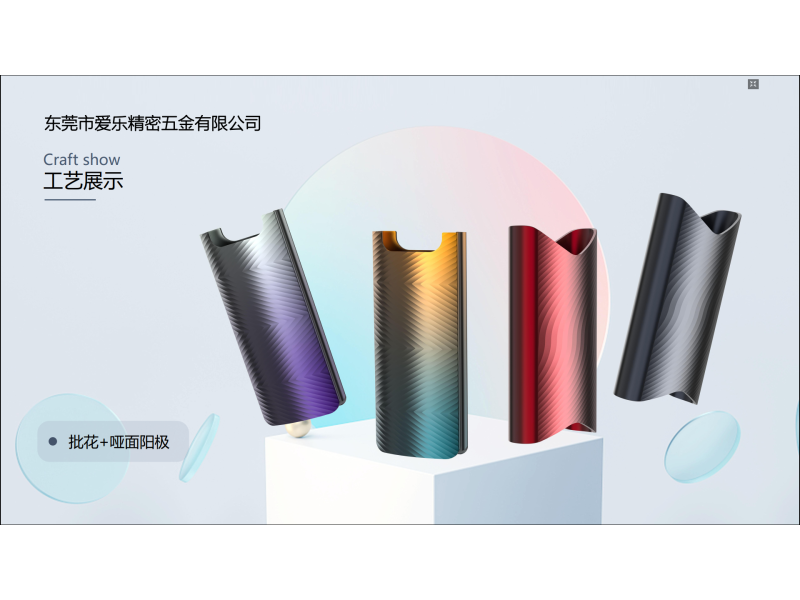
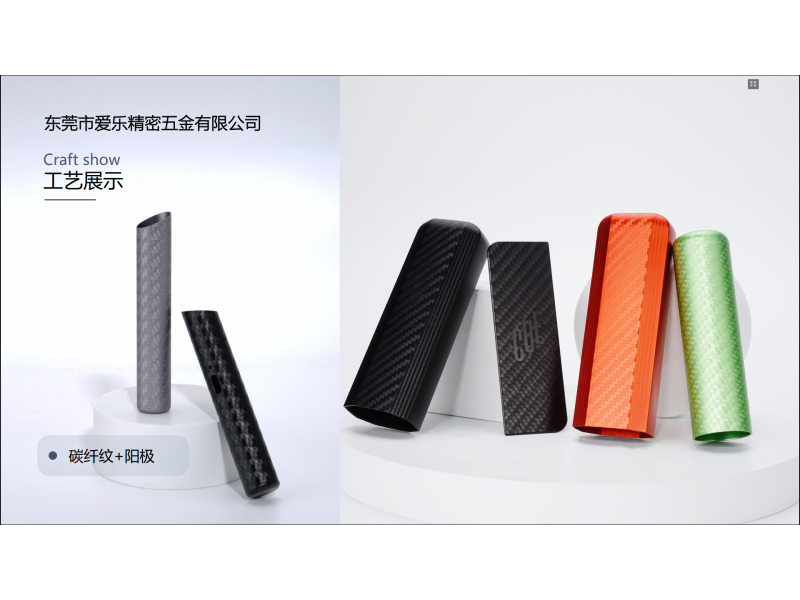
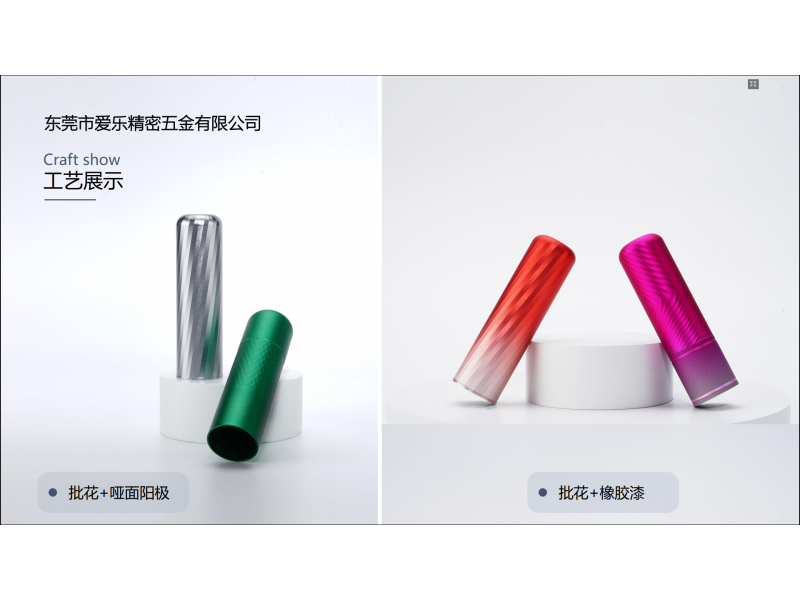
The alloy provides the base material properties, but the surface finish determines the final product's durability, tactile feel, and aesthetic appeal. Choosing the right finish is an integral part of the OEM/ODM specification.
A. Anodizing (Type II & III)
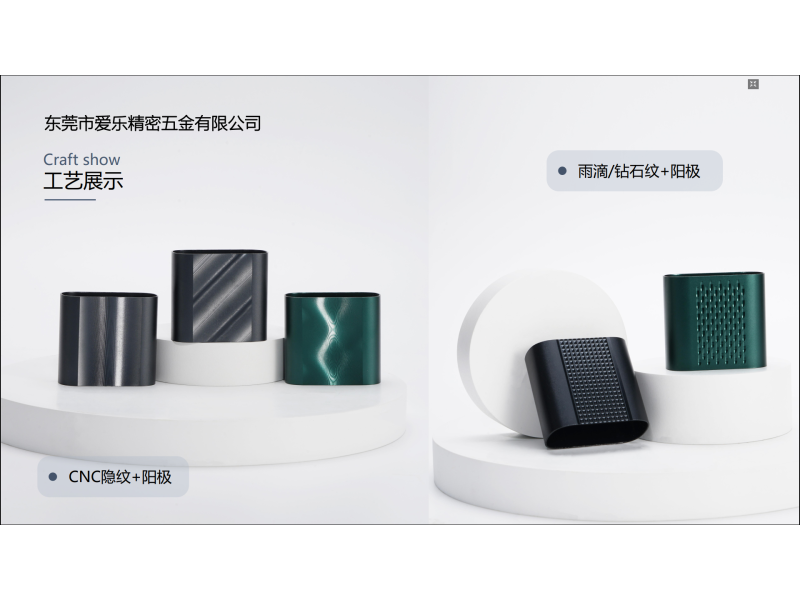
Anodizing is an electrochemical conversion process that significantly thickens the naturally occurring aluminum oxide layer. This layer is hard, porous, and highly resistant to wear.
Type II (Standard/Sulphuric): Provides a clean, cosmetic finish in various colors. It is primarily used for improved corrosion resistance and durability on consumer and light industrial enclosures.
Type III (Hardcoat): Achieved by running a higher current density at a lower temperature. This creates a much thicker, harder ceramic-like layer that offers superior abrasion and wear resistance. It is essential for parts exposed to extreme friction or high-contact industrial environments.
B. Powder Coating
Powder coating is a dry finishing process where finely ground particles of pigment and resin are electrostatically charged and sprayed onto the enclosure. The part is then cured under heat, causing the powder to melt and flow into a continuous, tough film.
Aesthetic Versatility: Offers the widest range of colors, textures, and sheen levels, which can be crucial for branding or device differentiation.
Impact Resistance: Provides an exceptionally durable, chip-resistant coating that is generally thicker than liquid paint, offering excellent impact resistance and masking minor cosmetic defects in the base metal.
Environmental Benefit: The process uses no solvents and releases negligible volatile organic compounds (VOCs).
VI. Conclusion: Partnering on Precision
Selecting the right aluminum alloy—whether it's the high-strength, thermally efficient 6061 or the corrosion-resistant, weldable 5052—is a nuanced decision that affects every stage of manufacturing, from machining efficiency to final product longevity. The choice must be a calculated function of the component's thermal budget, mechanical loads, environmental exposure, and required aesthetic.
At Aile Precision Hardware (coboggi.com), we specialize in premium OEM/ODM services, translating complex engineering requirements into high-quality aluminum enclosures. We don't just execute your design; we partner with you to validate the material selection and process (CNC, sheet metal, casting) to ensure optimal performance and cost-efficiency.
Ready to move from concept to mass production? Contact our engineering team today to discuss your project's specific material needs and discover the precision difference.
 English
 German
 French
 Russian
 Spanish
 Japanese
 Korean
 Khmer
Khmer Portuguese
 Ukrainian
 Arabic
 Italian
 Afrikaans
 Albanian
 Armenian
 Azerbaijani
 Basque
 Belarusian
 Bulgarian
 Catalan
 Croatian
 Czech
Czech Danish
 Dutch
Dutch Estonian
 Filipino
 Finnish
 Galician
 Georgian
 Greek
Greek Haitian Creole
 Hebrew
 Hindi
Hindi Hungarian
 Icelandic
 Indonesian
 Irish
Irish Latvian
 Lithuanian
 Macedonian
 Malay
Malay Maltese
 Norwegian
 Persian
 Polish
 Romanian
 Serbian
 Slovak
 Slovenian
 Swahili
 Swedish
 Thai
Thai Turkish
 Urdu
Urdu Vietnamese
 Welsh
Welsh Yiddish