

In the world of high-end audio, designers face a paradox: the equipment must be incredibly strong to withstand constant use, yet lightweight enough for hours of comfortable wear.
For professional headphones, portable DACs, and high-fidelity monitors, the choice of aluminum alloy is the most critical decision in the design phase.
While Aluminum 6061 is the workhorse of the industry, Aluminum 7075 is increasingly becoming the "holy grail" for flagship audio products. Here is how they compare in the high-stakes world of sound.
1. The Power of 7075: Strength-to-Weight King
Aluminum 7075 is often referred to as "Aerospace Grade" because its strength is comparable to many types of steel, yet it retains the lightness of aluminum.
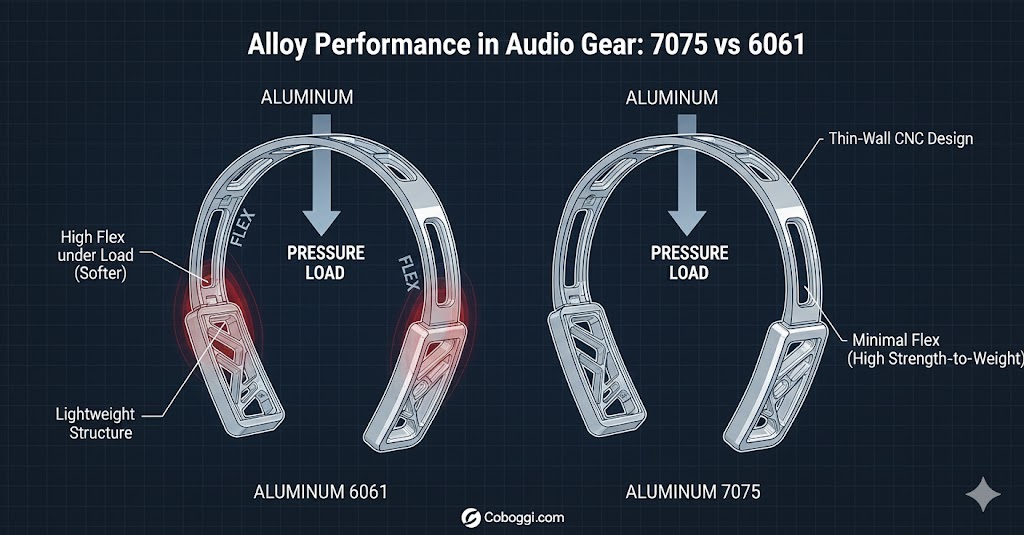
The Audio Advantage: For high-end headphones, using 7075 allows engineers to thin out the walls of the ear-cup or the headband suspension.
The Result: You get a chassis that is virtually indestructible but weighs 30% less than a 6061 counterpart of the same structural rigidity. In the audio world, a few grams can be the difference between a headset that feels "heavy" and one that feels "invisible."
2. 6061: The Master of Dampening and Finish
While 7075 wins on pure strength, 6061 remains the king of versatility.
Vibration Control: Aluminum 6061 has slightly different acoustic properties. Its molecular structure provides excellent internal dampening, which is crucial for speaker housings and amplifier chassis where "ringing" or unwanted resonance must be avoided.
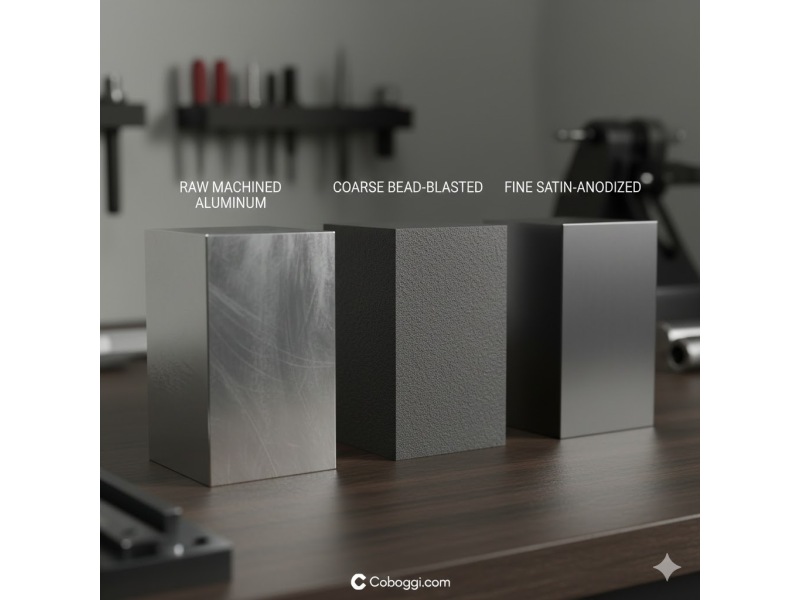
The Aesthetic Finish: 6061 is easier to anodize to a mirror-like or deep satin finish. For audio gear that needs to look like a piece of jewelry sitting on a desk, 6061 provides a more consistent, "rich" color depth.
3. Technical Breakdown: The Hard Numbers
| Property | Aluminum 6061-T6 | Aluminum 7075-T6 |
| Tensile Strength | ~310 MPa | ~572 MPa |
| Yield Strength | ~276 MPa | ~503 MPa |
| Machinability | Excellent | Good |
| Best For | Desktop DACs, Speaker Bezels | Pro-Headphones, Moving Parts |
4. Why "Thin-Wall" CNC is the Future
Modern audio design is moving toward "skeletonized" structures—frames that have been hollowed out to save weight without losing strength.
Coboggi’s Precision: Working with 7075 requires high-speed spindles and incredibly sharp tooling to prevent the material from "gumming." Our CNC capabilities allow us to machine walls down to 0.8mm in 7075, creating audio frames that are as light as carbon fiber but with the premium, cold-to-the-touch feel of metal.
Conclusion: Choosing Your Sound
If your product is a stationary desktop amplifier, 6061 offers the best balance of cost and finish. However, if you are building the world’s next great pair of professional monitors or a portable hi-res player, the strength-to-weight ratio of 7075 is an investment that users will feel—literally—every time they pick it up.

 English
 German
 French
 Russian
 Spanish
 Japanese
 Korean
 Khmer
Khmer Portuguese
 Ukrainian
 Arabic
 Italian
 Afrikaans
 Albanian
 Armenian
 Azerbaijani
 Basque
 Belarusian
 Bulgarian
 Catalan
 Croatian
 Czech
Czech Danish
 Dutch
Dutch Estonian
 Filipino
 Finnish
 Galician
 Georgian
 Greek
Greek Haitian Creole
 Hebrew
 Hindi
Hindi Hungarian
 Icelandic
 Indonesian
 Irish
Irish Latvian
 Lithuanian
 Macedonian
 Malay
Malay Maltese
 Norwegian
 Persian
 Polish
 Romanian
 Serbian
 Slovak
 Slovenian
 Swahili
 Swedish
 Thai
Thai Turkish
 Urdu
Urdu Vietnamese
 Welsh
Welsh Yiddish