

Walk into any electronics store, and you'll quickly notice a divide: on one shelf, affordable, often disposable gadgets housed in plastic.
On the other, premium devices—smartphones, high-end audio, professional tools—almost universally encased in metal.
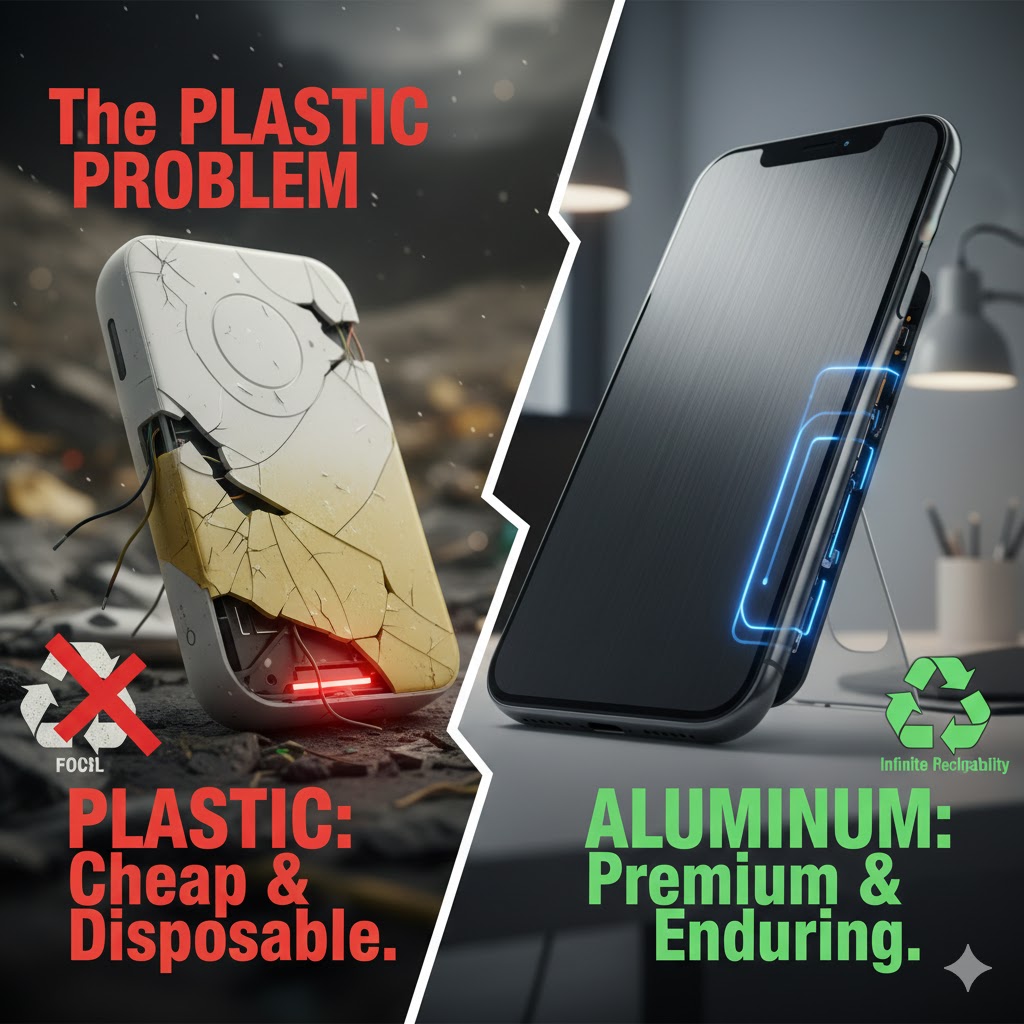
For years, plastic's low cost made it the default. But for brands aiming for premium positioning, longevity, and true performance, plastic is becoming a "trap" that compromises their vision.
At Coboggi, we've helped countless 3C and smart home brands escape this trap, demonstrating why aluminum is the only choice for building an enduring, high-quality product.
1. Thermal Suffocation: Plastic Traps the Heat
Modern electronics, especially compact smart hubs and powerful handhelds, generate significant heat.
The Problem: Plastic is an insulator. It traps heat inside the enclosure, leading to components overheating, performance throttling (slowing down), reduced battery life, and even premature failure.
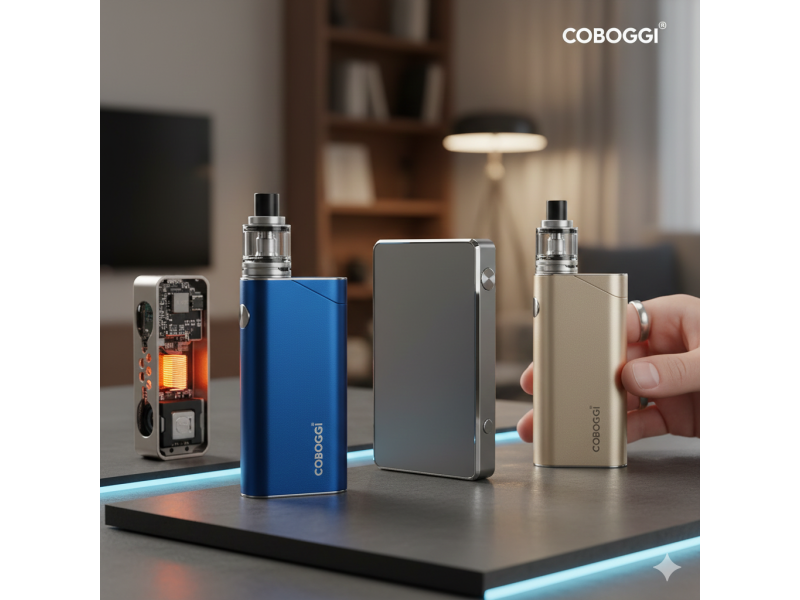
The Aluminum Advantage: Aluminum is an excellent thermal conductor. It acts as a passive heatsink, efficiently drawing heat away from sensitive internal components and dissipating it into the environment, ensuring stable, long-term performance.
2. The "Yellowing" Effect: Plastic Degrades, Aluminum Endures
Nothing cheapens a brand image faster than a product that looks old before its time.
The Problem: Plastic is susceptible to UV degradation (yellowing), scratching, and brittleness over time. Its surface can become dull, sticky, or discolored, particularly in smart home devices exposed to ambient light.
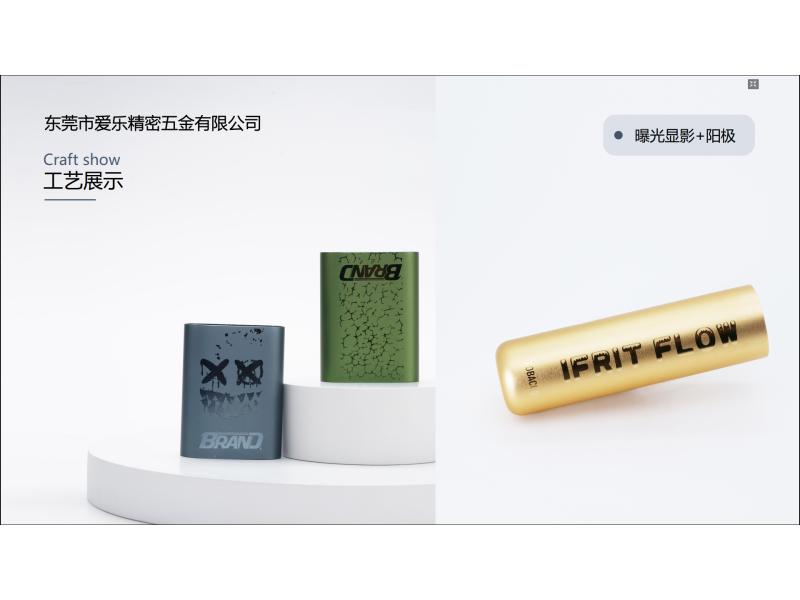
The Aluminum Advantage: Anodized aluminum is incredibly durable. It resists UV damage, corrosion, and everyday wear, maintaining its pristine color and finish for decades, ensuring your product always looks as good as it performs.
3. The "Hollow" Sound: Perceived Value & Hand-Feel
Customers make instant judgments based on tactile feedback.
The Problem: Plastic often feels light, hollow, and can creak under pressure. This translates to a perception of lower quality and fragility, undermining your brand's premium claims.
The Aluminum Advantage: Aluminum provides a satisfying, substantial weight and a cool-to-the-touch sensation. It feels solid, durable, and precisely engineered—qualities that instantly convey high value and reliability.
4. Environmental Dead-End: Plastic's Waste Legacy
Sustainability is no longer optional; it's a market imperative.
The Problem: The vast majority of plastic ends up in landfills or oceans, and even when "recycled," it often degrades in quality, limiting its reuse.
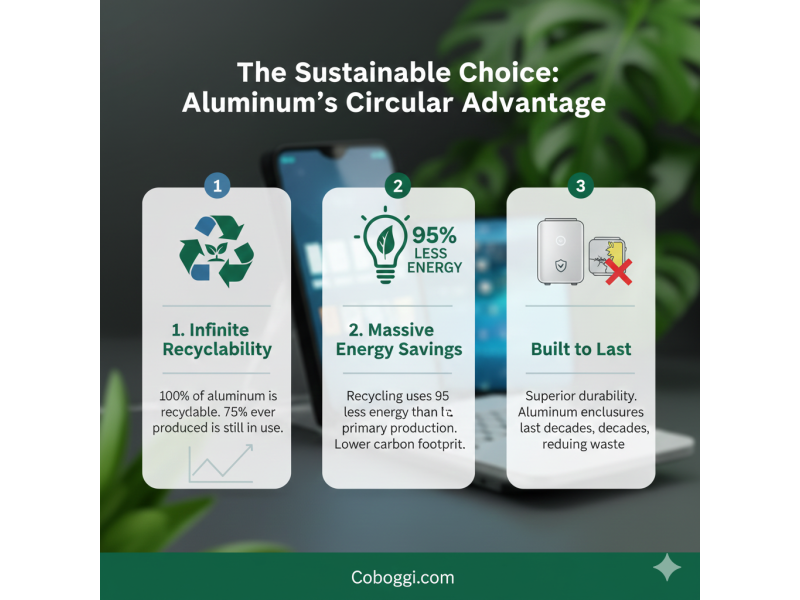
The Aluminum Advantage: Aluminum is the "infinite" metal. It is 100% recyclable, retaining its full quality indefinitely. Choosing aluminum significantly boosts your brand's ESG (Environmental, Social, and Governance) profile and appeals to eco-conscious consumers.
5. Precision Failure: The Inaccuracy of Synthetics
As devices shrink, microscopic precision becomes paramount.
The Problem: Plastic, especially in injection molding, is prone to warping, shrinkage, and dimensional instability. Achieving and maintaining ultra-tight tolerances (e.g., ±0.01mm) for seamless fits and robust IP ratings is incredibly difficult, leading to visible gaps, loose buttons, and compromised waterproofing.
The Aluminum Advantage: Precision CNC machining of aluminum allows for extremely tight tolerances and stable dimensions, even for ultra-thin walls. This ensures a perfect fit for all components, a seamless exterior, and reliable long-term functionality, critical for premium devices.
Conclusion: Invest in Aluminum, Invest in Your Brand
The initial cost savings of plastic are often outweighed by long-term compromises in performance, durability, and brand perception. For electronics brands committed to quality, sustainability, and a premium customer experience, the choice is clear.
By partnering with Coboggi, you choose a material that elevates your product from a mere gadget to a statement of engineering excellence. Avoid the plastic trap—build with aluminum.

 English
 German
 French
 Russian
 Spanish
 Japanese
 Korean
 Khmer
Khmer Portuguese
 Ukrainian
 Arabic
 Italian
 Afrikaans
 Albanian
 Armenian
 Azerbaijani
 Basque
 Belarusian
 Bulgarian
 Catalan
 Croatian
 Czech
Czech Danish
 Dutch
Dutch Estonian
 Filipino
 Finnish
 Galician
 Georgian
 Greek
Greek Haitian Creole
 Hebrew
 Hindi
Hindi Hungarian
 Icelandic
 Indonesian
 Irish
Irish Latvian
 Lithuanian
 Macedonian
 Malay
Malay Maltese
 Norwegian
 Persian
 Polish
 Romanian
 Serbian
 Slovak
 Slovenian
 Swahili
 Swedish
 Thai
Thai Turkish
 Urdu
Urdu Vietnamese
 Welsh
Welsh Yiddish