

The biggest challenge in the smart home industry isn't inventing new technology; it's dealing with the speed of change.
A cutting-edge smart hub bought today might lack the newest connectivity protocol (like Matter or Thread) in two years.
For consumers, replacing an entire hardware unit just to get one new feature is frustrating and wasteful. The solution for forward-thinking OEMs is Modular Hardware Design. Instead of building a static, single-function box, brands are building expandable ecosystems.
At Coboggi, we are seeing a surge in demand for interlocking, stackable, and expandable aluminum enclosures. Here is why modularity is the future of smart home hardware, and why aluminum is the only material durable enough to make it work.
1. The Concept: Hardware as a Platform
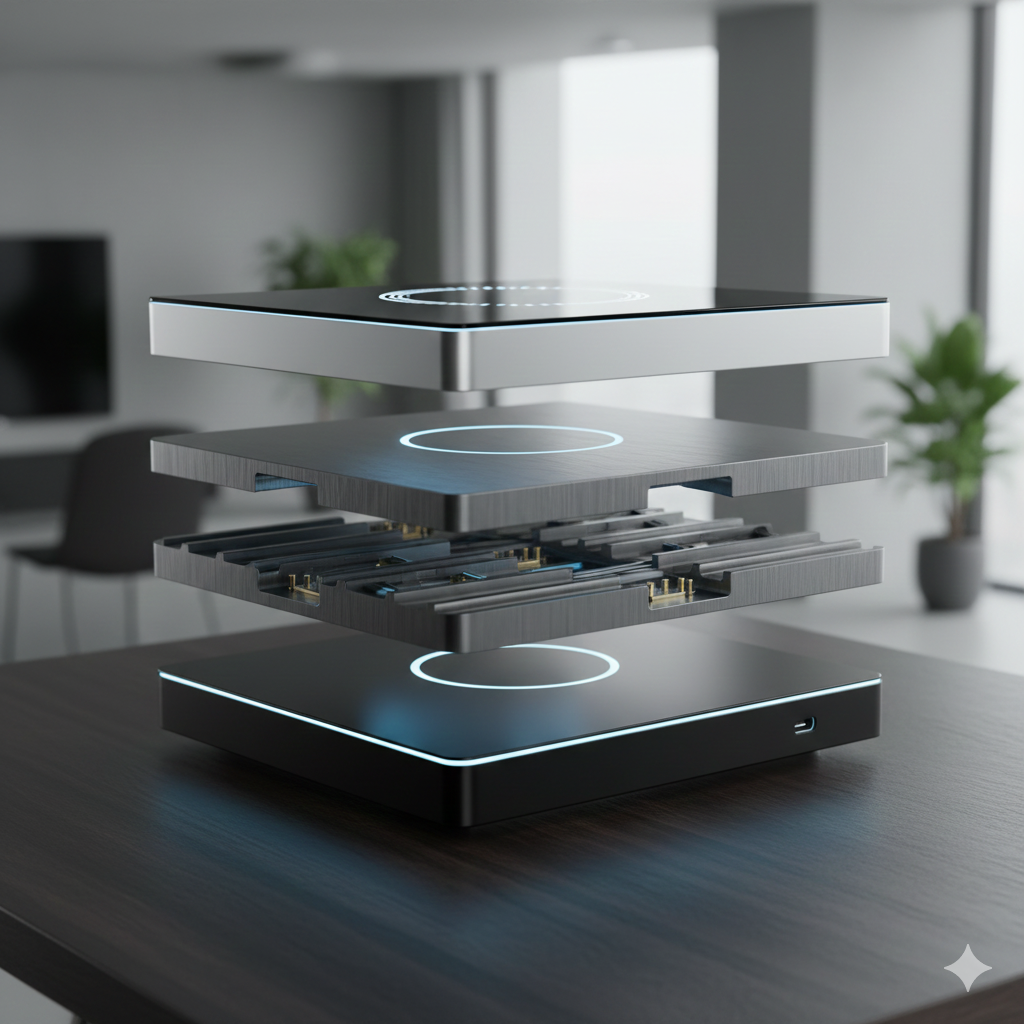
Think of modular design like LEGO blocks for sophisticated electronics. You start with a "Base Unit" (containing the core processor and power). As the user's needs grow, or as new technology emerges, they can purchase additional "Modules" that physically connect to the base.
Examples of Modularity: Adding a battery backup module, snapping on a Zigbee repeater, or stacking a dedicated AI processing unit onto a standard camera base.
The Business Benefit: It turns a one-time sale into an ongoing relationship. You sell the base unit once, and high-margin upgrade modules for years to come.
2. Why Plastic Fails at Modularity
Modular systems require repeated connecting and disconnecting. Plastic snap-fits wear down, crack, and loosen over time, leading to poor electrical connections and a cheap feeling product.
Aluminum is the enabler of durable modularity:
Robust Interlocking: Aluminum can be machined into precise, rigid sliding rails, bayonet mounts, or magnetic locking interfaces that withstand thousands of attachment cycles without degrading.
EMI Shielding Continuity: When connecting two modules, you need to maintain the "Faraday Cage." Precision-machined aluminum interfaces ensure continuous electrical grounding between units, preventing signal interference leaks at the seams.
Shared Thermal Management: As you stack more powerful modules (like an AI processor), heat increases. Aluminum modules act as a shared heatsink, transferring thermal energy across the entire assembly to keep the system cool.
3. Manufacturing the Modular Ecosystem with Coboggi
Creating a modular system requires a mix of manufacturing disciplines.
The Base (Aluminum Extrusion): For the main body of a hub or a soundbar, aluminum extrusion is often the most cost-effective method to create complex internal profiles and long, seamless exteriors.
The Interfaces (CNC Machining): The critical connecting points—where the modules lock together—require the ±0.01mm precision of CNC machining to ensure a tight, satisfying "click" and perfect electrical contact every time.
Conclusion: Building for the Decade, Not Just the Year
A modular aluminum enclosure is an investment in sustainability and customer loyalty. It tells your users that you are thinking about their long-term needs, not just the next quick sale.
By partnering with Coboggi, you gain the manufacturing expertise needed to execute complex, interlocking designs that stand the test of time. Let’s build hardware that grows.
 English
 German
 French
 Russian
 Spanish
 Japanese
 Korean
 Khmer
Khmer Portuguese
 Ukrainian
 Arabic
 Italian
 Afrikaans
 Albanian
 Armenian
 Azerbaijani
 Basque
 Belarusian
 Bulgarian
 Catalan
 Croatian
 Czech
Czech Danish
 Dutch
Dutch Estonian
 Filipino
 Finnish
 Galician
 Georgian
 Greek
Greek Haitian Creole
 Hebrew
 Hindi
Hindi Hungarian
 Icelandic
 Indonesian
 Irish
Irish Latvian
 Lithuanian
 Macedonian
 Malay
Malay Maltese
 Norwegian
 Persian
 Polish
 Romanian
 Serbian
 Slovak
 Slovenian
 Swahili
 Swedish
 Thai
Thai Turkish
 Urdu
Urdu Vietnamese
 Welsh
Welsh Yiddish