

Carbon fiber is iconic, but it has limitations: it’s an insulator (traps heat), it can crack upon impact, and it’s difficult to recycle.
For many 3C and automotive brands, the goal is to capture the visual prestige of carbon fiber while retaining the mechanical advantages of aluminum—specifically its heat conductivity and structural "heft."
At Coboggi, we achieve this through high-speed 3D laser mapping and specialized anodizing.
1. The "Weave" Logic: 3D Laser Mapping
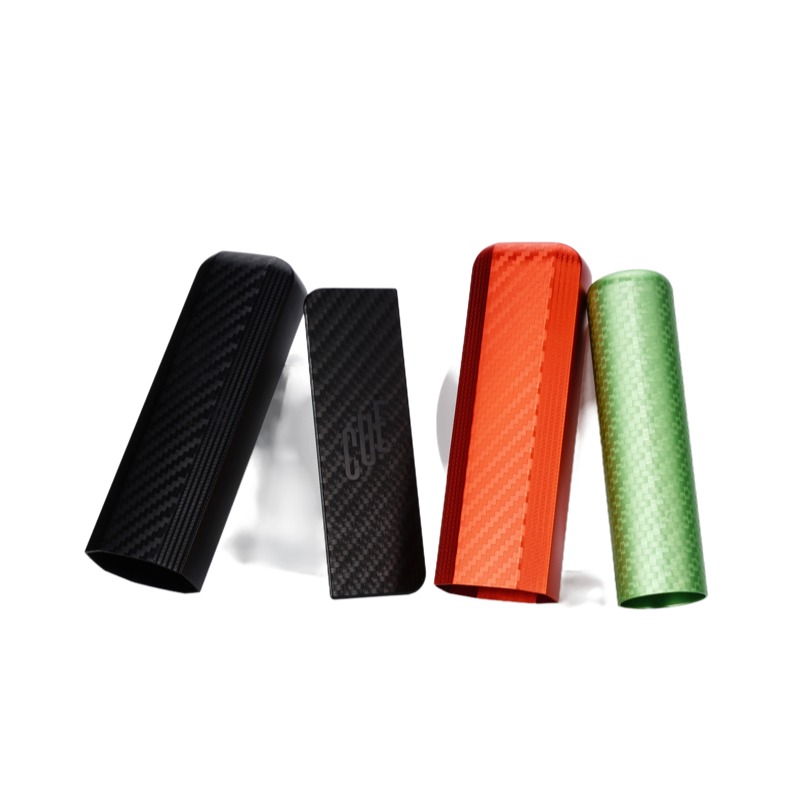
A real carbon fiber weave isn't just a print; it’s a series of overlapping ribbons that reflect light in different directions. To replicate this on aluminum, we don't just "etch" a pattern—we texture it.
Angular Micro-Vaneering: The laser carves microscopic "steps" at alternating angles (0° and 90°).
The Optical Result: When you rotate the part, the "fibers" seem to move and shimmer, exactly like a 3K twill weave. This is a 3D effect that traditional silk-screening or printing can never achieve.
2. Why Aluminum is the Superior Carrier
While carbon fiber looks great, using aluminum as the base material provides three critical benefits:
Thermal Management: In high-performance gaming laptops or chargers, the "carbon" surface actually acts as a massive heat sink.
EMI Shielding: Aluminum naturally blocks electromagnetic interference, protecting the sensitive electronics inside—something carbon fiber composites struggle with.
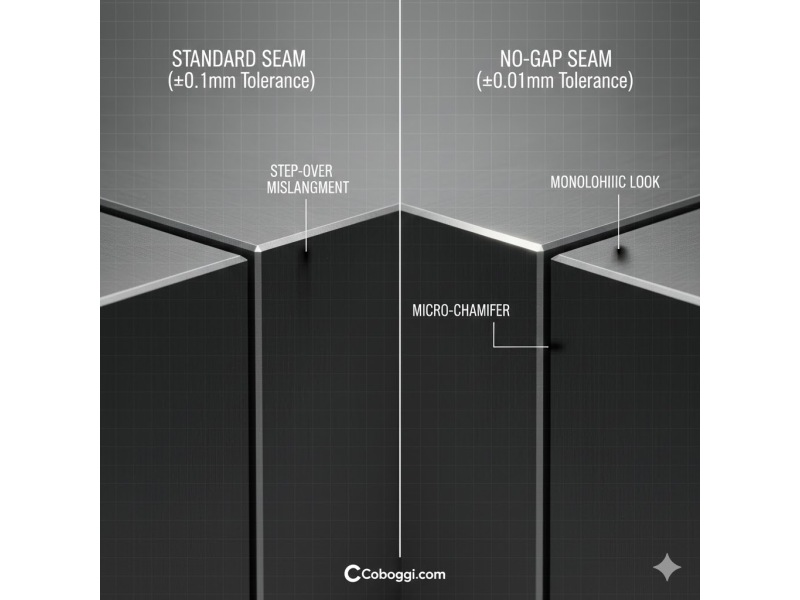
Precision Fit: We can machine complex screw threads and interlocking "no-gap" seams directly into the "carbon-textured" part, which is nearly impossible with molded carbon fiber.
3. The Color Strategy: Beyond Black
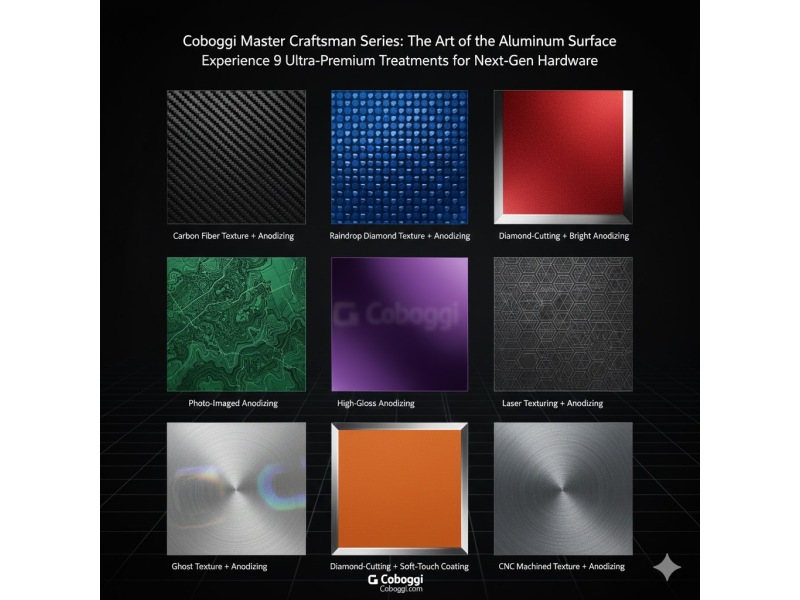
Traditional carbon fiber is black. With Coboggi’s Anodizing, we can create "Exotic Carbon" looks that don't exist in nature:
Electric Blue Carbon: A deep blue anodizing over the weave texture.
Titanium Grey Carbon: A metallic, industrial look that feels like a military-grade alloy.
The "Depth" Seal: We use a high-gloss sealing process after anodizing to give the texture a "wet" look, mimicking the resin coating found on real high-end carbon fiber parts.
4. Tactile Feedback
Unlike a "skin" or a sticker, the texture is physically part of the metal.
The Hand-Feel: It feels slightly "woven" to the touch, providing a premium, non-slip grip that is perfect for handheld controllers, smartphone cases, or automotive gear shifters.
Durability: Because the pattern is engraved 20 μm to 50 μm deep into the metal, it will never peel, bubble, or wear away, even after years of friction.
5. Applications: Where Speed Meets Metal
Gaming Hardware: Mouse covers, laptop lids, and GPU backplates.
Automotive Interiors: Center console trims, paddle shifters, and door handle inserts.
Luxury Stationery: High-end pens that want to look "Aerospace" but feel "Metallic."
Conclusion: The Best of Both Worlds
Carbon Fiber Texture + Anodizing is the ultimate "cheat code" for designers. It allows you to wrap your product in the language of high-performance racing while maintaining the rock-solid reliability of CNC-machined aluminum.
 English
 German
 French
 Russian
 Spanish
 Japanese
 Korean
 Khmer
Khmer Portuguese
 Ukrainian
 Arabic
 Italian
 Afrikaans
 Albanian
 Armenian
 Azerbaijani
 Basque
 Belarusian
 Bulgarian
 Catalan
 Croatian
 Czech
Czech Danish
 Dutch
Dutch Estonian
 Filipino
 Finnish
 Galician
 Georgian
 Greek
Greek Haitian Creole
 Hebrew
 Hindi
Hindi Hungarian
 Icelandic
 Indonesian
 Irish
Irish Latvian
 Lithuanian
 Macedonian
 Malay
Malay Maltese
 Norwegian
 Persian
 Polish
 Romanian
 Serbian
 Slovak
 Slovenian
 Swahili
 Swedish
 Thai
Thai Turkish
 Urdu
Urdu Vietnamese
 Welsh
Welsh Yiddish