

As we move from the structural geometry of the chassis to its electrical performance, we encounter the invisible protector of high-end hardware: Electromagnetic Shielding.
In an era of hyper-connectivity, the Faraday Enclosure design ensures that internal signals remain pure while external interference is reflected away.
Defending the Signal
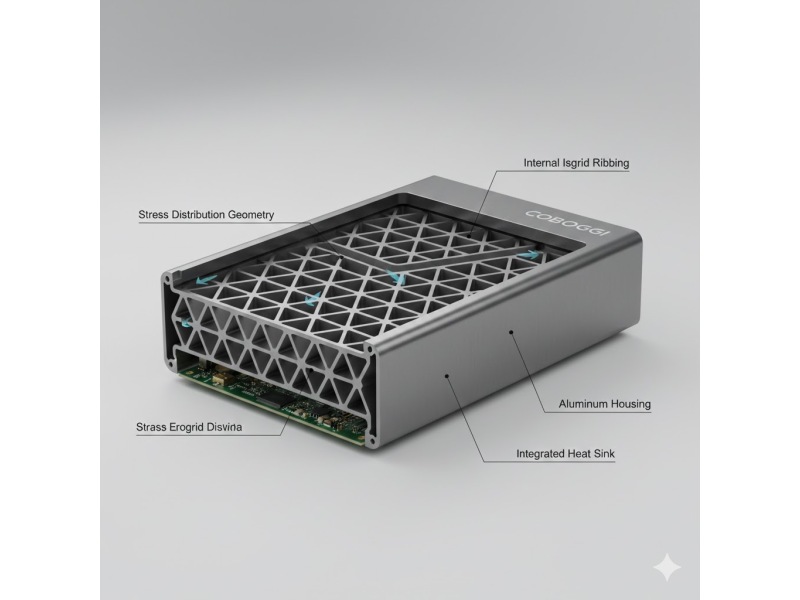
For the Faraday Enclosure, the aluminum housing is more than a shell; it is a conductive barrier. If the chassis isn't engineered to be electrically continuous, it becomes an antenna rather than a shield.
1. Conductive Gasketing
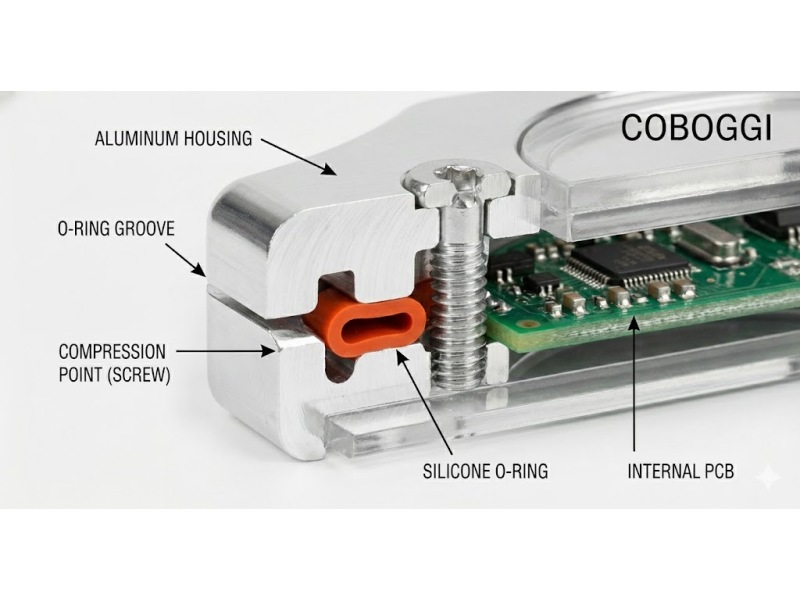
To maintain the shielding across joints (like the ones we explored in Article #76 The Weight of Portability), we utilize silver-loaded conductive gaskets. These ensure that even where the device opens, the electrical "seal" remains unbroken, preventing Electromagnetic Interference (EMI) from leaking in or out.
2. The Attenuation Effect
The specific thickness of the aluminum walls in the Faraday Enclosure is calculated based on the "skin effect" of radio frequencies. By matching material density to expected interference ranges, we achieve high decibel attenuation, protecting sensitive sensors from the noise of Wi-Fi, 5G, and industrial motors.
3. PCB Grounding Points
Inside the Faraday Enclosure, integrated mounting bosses serve as direct-to-chassis grounding points.
This design flushes parasitic capacitance directly into the metal frame, lowering the noise floor of the electronics and ensuring the highest possible data integrity for the user.
.png?x-oss-process=image/resize,m_pad,h_600,w_800)
 English
 German
 French
 Russian
 Spanish
 Japanese
 Korean
 Khmer
Khmer Portuguese
 Ukrainian
 Arabic
 Italian
 Afrikaans
 Albanian
 Armenian
 Azerbaijani
 Basque
 Belarusian
 Bulgarian
 Catalan
 Croatian
 Czech
Czech Danish
 Dutch
Dutch Estonian
 Filipino
 Finnish
 Galician
 Georgian
 Greek
Greek Haitian Creole
 Hebrew
 Hindi
Hindi Hungarian
 Icelandic
 Indonesian
 Irish
Irish Latvian
 Lithuanian
 Macedonian
 Malay
Malay Maltese
 Norwegian
 Persian
 Polish
 Romanian
 Serbian
 Slovak
 Slovenian
 Swahili
 Swedish
 Thai
Thai Turkish
 Urdu
Urdu Vietnamese
 Welsh
Welsh Yiddish