

In professional-grade hardware—be it a high-end camera body, a tactical flashlight, or a performance automotive component—the surface must do more than just look good. It must perform.
It needs to provide a secure grip, resist heavy scratching, and handle the "oil" from human skin without losing its finish.
This is where Laser Texturing + Anodizing becomes the superior choice over traditional mechanical texturing (like knurling).
1. What is Laser Texturing?
Unlike sandblasting, which uses physical media to impact the surface, Laser Texturing uses a high-frequency Fiber Laser to "vaporize" and "remelt" the aluminum at a microscopic level.
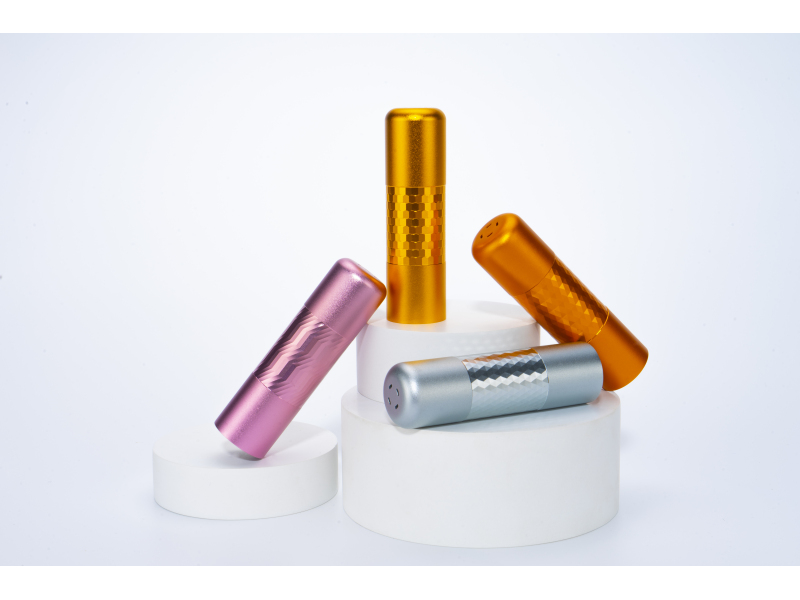
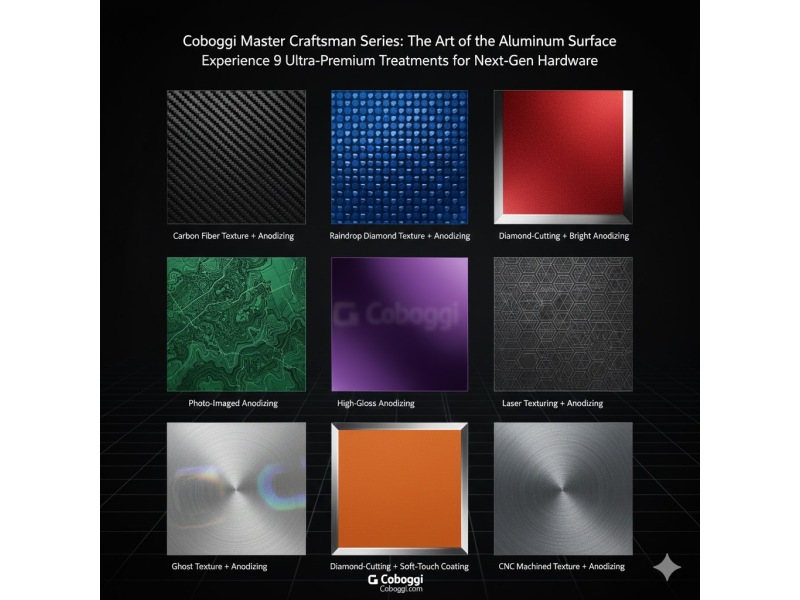
Pattern Precision: We can create geometric patterns (hexagons, micro-dots, or cross-hatches) that are impossible to achieve with a CNC tool.
Depth Control: We can control the texture depth down to the micron, ensuring the grip is aggressive enough to be functional but smooth enough to be comfortable.
2. The Performance Benefits
Why should an engineer choose laser texturing over a standard matte finish?
Increased Surface Area: The micro-valleys created by the laser increase the surface area of the metal. When this is anodized, the oxide layer has more "anchoring points," making the color and the coating much harder to chip.
Friction Management: By concentrating texture in specific zones (like the sides of a handheld device), we can create "non-slip" zones exactly where the user’s fingers rest.
Scratch Camouflage: Because the surface is already "patterned," small scratches from everyday use blend into the texture rather than standing out as eyesores.
3. The "Two-Tone" Functional Aesthetic
At Coboggi, we often use a "Textured-on-Polished" approach.
We machine the aluminum to a high-gloss or satin finish.
We use the laser to apply a dense texture only to the functional grip areas.
The entire part is then anodized. The result is a sophisticated contrast where the smooth metal catches the light, and the textured metal provides a dark, rugged matte look.
4. Why Anodizing is Non-Negotiable
Laser texturing leaves the aluminum "raw" and vulnerable to oxidation. Anodizing is the essential second step.
Dye Absorption: The textured areas absorb more dye than the smooth areas, giving the grip a deeper, richer color (often appearing a shade darker), which adds to the visual "toughness" of the product.
Wear Resistance: Without the hard-anodized layer, the fine "peaks" of the laser texture would wear down quickly. The anodizing process hardens these peaks to a level near that of sapphire.
5. Applications: Where Function Meets Form
Handheld Pro-Tools: Drills, measuring devices, and medical instruments.
Camera Grips: Providing a "leather-like" feel using pure aluminum.
Automotive Shift Knobs: Combining a cool-to-the-touch metal feel with high-friction control.
Conclusion: Built for the Real World
Laser texturing + Anodizing is the hallmark of "Over-Engineered" quality. It tells the user that the product was designed for the rigors of real-world use while maintaining a sleek, modern aesthetic. At Coboggi, we don't just texture metal; we engineer it for the human hand.
 English
 German
 French
 Russian
 Spanish
 Japanese
 Korean
 Khmer
Khmer Portuguese
 Ukrainian
 Arabic
 Italian
 Afrikaans
 Albanian
 Armenian
 Azerbaijani
 Basque
 Belarusian
 Bulgarian
 Catalan
 Croatian
 Czech
Czech Danish
 Dutch
Dutch Estonian
 Filipino
 Finnish
 Galician
 Georgian
 Greek
Greek Haitian Creole
 Hebrew
 Hindi
Hindi Hungarian
 Icelandic
 Indonesian
 Irish
Irish Latvian
 Lithuanian
 Macedonian
 Malay
Malay Maltese
 Norwegian
 Persian
 Polish
 Romanian
 Serbian
 Slovak
 Slovenian
 Swahili
 Swedish
 Thai
Thai Turkish
 Urdu
Urdu Vietnamese
 Welsh
Welsh Yiddish