

For decades, anodizing was limited to a single, uniform color. If you wanted two colors, you needed two separate parts. Not anymore.
The rise of "Lifestyle Tech"—gaming peripherals, boutique EDC (Every Day Carry), and youth-oriented electronics—has pushed the boundaries of color. Today, Coboggi can apply multiple colors to a single piece of aluminum, creating seamless fades or chaotic "splash" patterns that make every single unit unique.
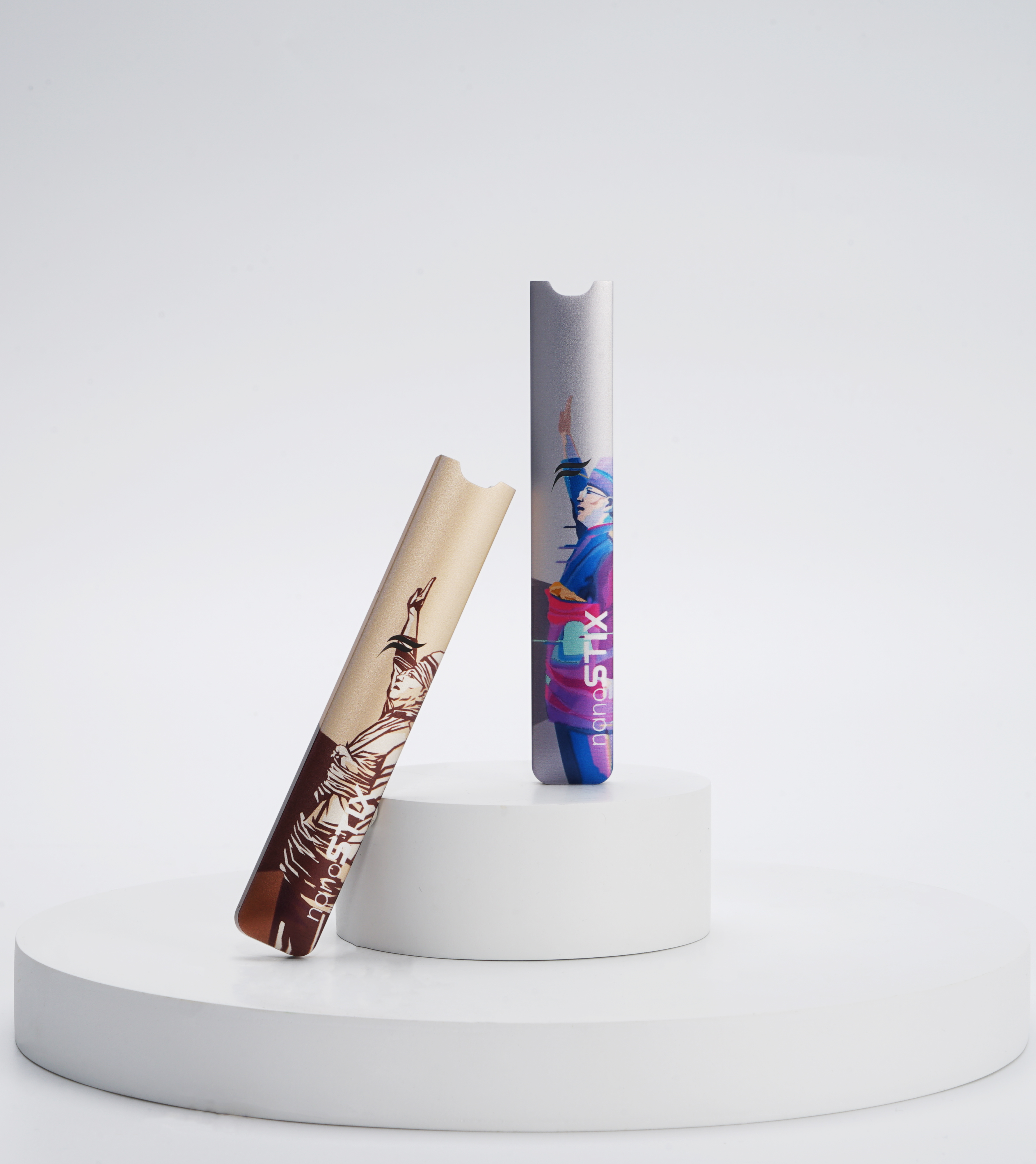
1. The Gradient (Ombré) Technique
The most popular multi-color finish is the Gradient. To achieve a seamless fade from, for example, Cyber Purple to Electric Blue, we use a "Timed Dip" process.
The Motion: After the part is anodized (pores opened), it is lowered into the first dye bath at a controlled, robotic speed.
The Immersion Factor: The longer a section stays in the dye, the deeper the color. By varying the speed and angle of withdrawal, we create a smooth transition where the colors blend perfectly at the center.
2. "Splash" and "Acid Wash" Anodizing
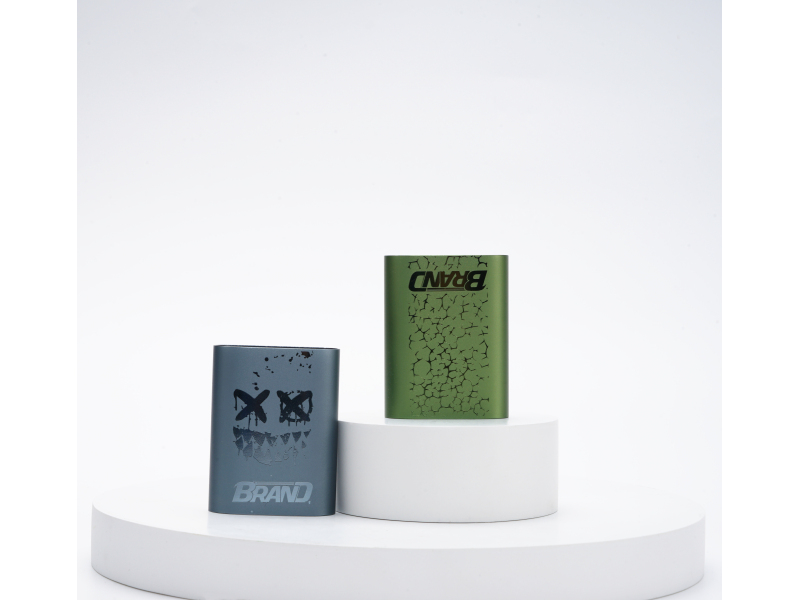
For brands that want an "aggressive" or "streetwear" look, we use masking and secondary dipping.
The Process: A part is dyed in a base color, then "masked" using a random splash of protective resin or wax.
The Reveal: The part is dipped into a second, darker dye. When the mask is removed, a chaotic, high-contrast pattern remains. No two parts are ever identical, creating a "Limited Edition" feel for every customer.
3. Double Anodizing (The "Pop" Detail)
This is a more surgical approach to multi-color.
First Color: Anodize the whole part in Color A.
Selective Stripping: Use a laser or CNC tool to remove the anodized layer in specific spots (like a logo or a grip).
Second Color: Re-anodize the part in Color B. The new color only sticks to the "raw" areas, creating a crisp, two-tone finish.
4. The Technical Challenge: Chemistry Management
Multi-color anodizing is notoriously difficult to stabilize.
Dye Contamination: If the first dye isn't properly neutralized, it can bleed into the second tank, ruining the batch.
Consistency: Achieving the exact "mid-point" of a gradient across 10,000 units requires precision robotic timing that manual shops cannot replicate.
5. Applications: Where Color is King
Gaming Peripherals: Mouse housings and mechanical keyboard frames with "Neon" fades.
Outdoor & EDC: High-end pocket knives or flashlights with "Toxic" splash patterns.
Vape & Lifestyle Tech: Using "Sunset" gradients to appeal to a younger, design-conscious demographic.
Conclusion: Beyond the Monolith
The final subject of our series proves that aluminum doesn't have to be "cold" or "gray." It can be as vibrant and expressive as any other material. Multi-color anodizing is the ultimate tool for brands that want to stand out in a crowded marketplace.
 English
 German
 French
 Russian
 Spanish
 Japanese
 Korean
 Khmer
Khmer Portuguese
 Ukrainian
 Arabic
 Italian
 Afrikaans
 Albanian
 Armenian
 Azerbaijani
 Basque
 Belarusian
 Bulgarian
 Catalan
 Croatian
 Czech
Czech Danish
 Dutch
Dutch Estonian
 Filipino
 Finnish
 Galician
 Georgian
 Greek
Greek Haitian Creole
 Hebrew
 Hindi
Hindi Hungarian
 Icelandic
 Indonesian
 Irish
Irish Latvian
 Lithuanian
 Macedonian
 Malay
Malay Maltese
 Norwegian
 Persian
 Polish
 Romanian
 Serbian
 Slovak
 Slovenian
 Swahili
 Swedish
 Thai
Thai Turkish
 Urdu
Urdu Vietnamese
 Welsh
Welsh Yiddish