

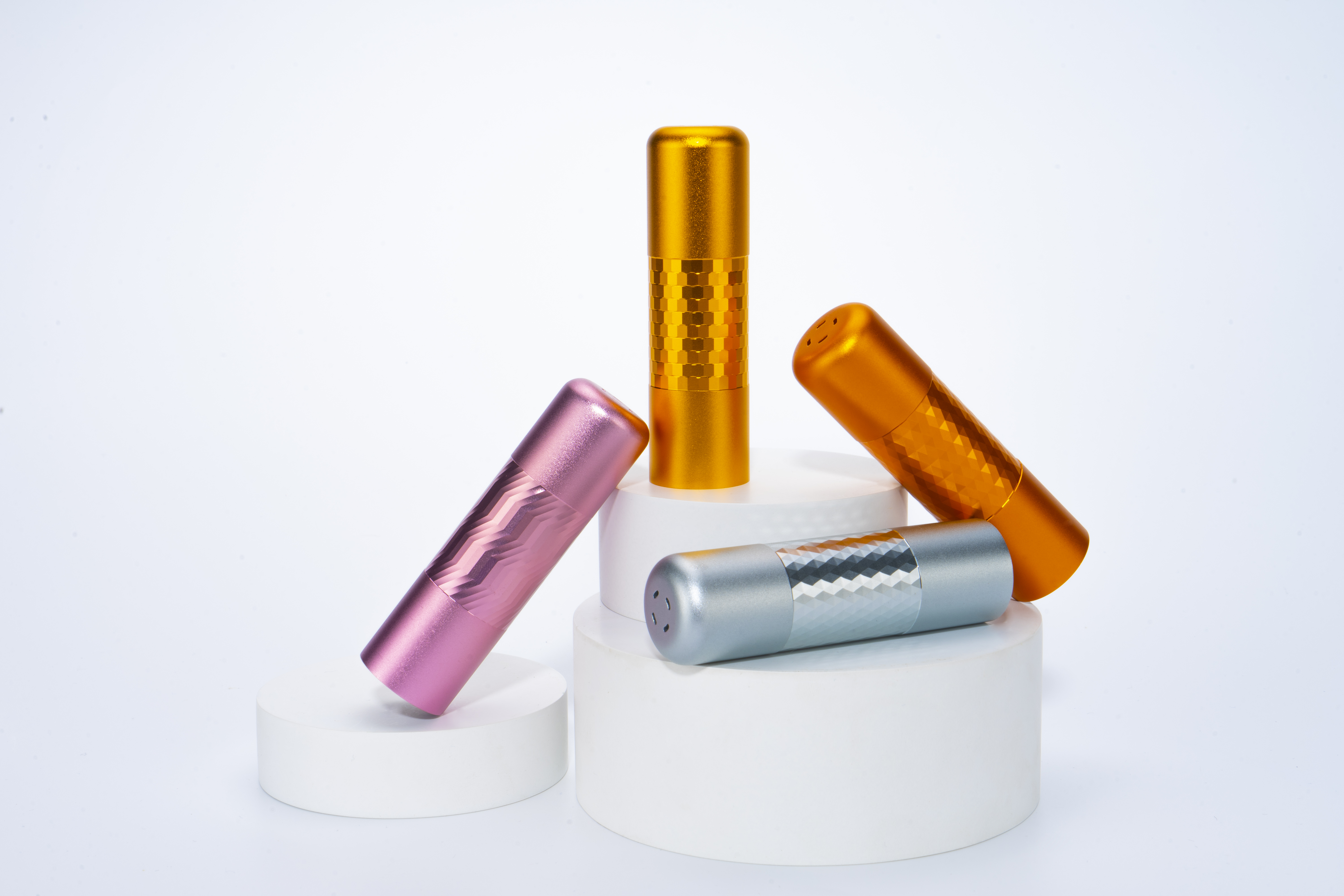
In the world of premium hardware, "glimmer" is a language. When a customer rotates a device in their hand and a sharp, silver flash catches the light, their brain instantly registers quality.
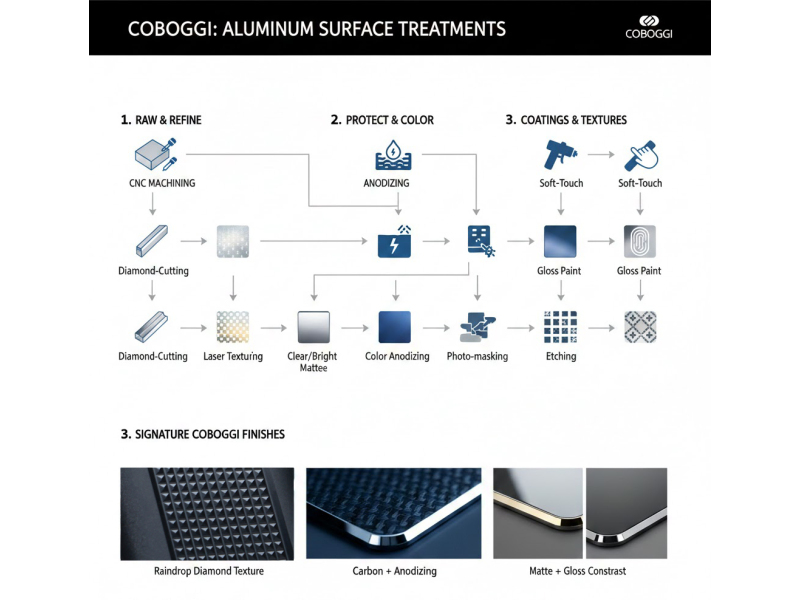
That flash is rarely accidental; it is the result of Diamond-Cutting (DC) paired with Bright Anodizing.
At Coboggi, we treat this process as a micro-surgical operation. Here is how we turn a standard aluminum edge into a piece of industrial jewelry.
1. The Tool: Monocrystalline Diamonds
Unlike standard CNC bits made of tungsten carbide, Diamond-Cutting uses a single-crystal natural or synthetic diamond.
Why Diamond? Diamonds can be ground to an edge that is molecularly sharp.
The Result: Instead of "tearing" the aluminum fibers (which creates a matte look), the diamond tool shears the metal so cleanly that the surface is inherently reflective, even before it hits the polishing lab.
2. The Process: The "Anodize-Cut-Anodize" Workflow
To get the high-contrast look (for example, a black body with silver edges), we follow a rigorous sequence:
First Anodizing: The entire part is anodized in the primary color (e.g., Deep Matte Black).
Diamond-Cutting: The part is re-jigged in a high-speed CNC machine. The diamond tool carves a precise chamfer (30℃ or 45℃), stripping away the black layer to reveal the raw, mirror-shorn aluminum underneath.
Bright Anodizing (Sealant): We perform a secondary "Bright Anodizing" pass. This applies a crystal-clear, high-gloss protective layer over the raw silver edge to prevent oxidation without losing the "mirror" effect.
3. The "Bright" in Bright Anodizing
Standard anodizing is meant to protect; Bright Anodizing is meant to enhance. We use a specialized chemical "electropolishing" bath before the final seal. This smooths out the microscopic peaks and valleys of the metal, maximizing specular reflection.
Standard Anodizing: Diffuses light (Matte).
Bright Anodizing: Reflects light (Mirror).
4. Technical Challenges: The Zero-Tolerance Zone
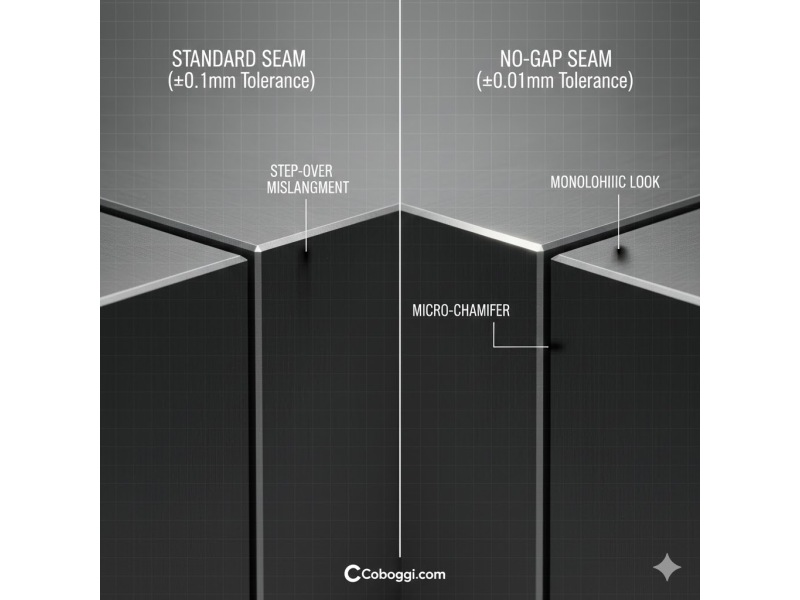
Diamond-cutting is unforgiving. If the CNC machine vibrates even by 5μm, the "mirror" will have tiny visible lines (chatter marks).
Coboggi’s Solution: We use ultra-stable, high-RPM spindles (up to 60,000 RPM) and custom-built vacuum fixtures to ensure the part does not move a fraction of a millimeter during the cut.
5. Where to Apply This Finish?
Bezels: Around camera lenses or smartphone screens.
Buttons & Knobs: To make functional elements "pop" against a matte chassis.
Logo Inlays: Carving brand names into anodized surfaces for a permanent, premium shine.
Conclusion: Designing with Contrast
Diamond-cutting isn't just a decorative choice; it's a tool for Visual Hierarchy. By using light to draw the eye to specific edges, you define the silhouette of your product. It is the ultimate "finishing touch" for brands that refuse to blend in.
 English
 German
 French
 Russian
 Spanish
 Japanese
 Korean
 Khmer
Khmer Portuguese
 Ukrainian
 Arabic
 Italian
 Afrikaans
 Albanian
 Armenian
 Azerbaijani
 Basque
 Belarusian
 Bulgarian
 Catalan
 Croatian
 Czech
Czech Danish
 Dutch
Dutch Estonian
 Filipino
 Finnish
 Galician
 Georgian
 Greek
Greek Haitian Creole
 Hebrew
 Hindi
Hindi Hungarian
 Icelandic
 Indonesian
 Irish
Irish Latvian
 Lithuanian
 Macedonian
 Malay
Malay Maltese
 Norwegian
 Persian
 Polish
 Romanian
 Serbian
 Slovak
 Slovenian
 Swahili
 Swedish
 Thai
Thai Turkish
 Urdu
Urdu Vietnamese
 Welsh
Welsh Yiddish