

The interior of the modern automobile is undergoing a radical transformation.
As internal combustion engines vanish, the "dashboard" is being replaced by the "cockpit"—a high-tech environment dominated by massive, high-resolution touchscreens and minimalist aesthetics.
For decades, car interiors were the domain of injection-molded plastics. However, as EVs move upmarket, luxury brands are abandoning plastic in favor of precision-machined aluminum. At Coboggi, we are seeing a surge in demand for aluminum frames and housings for the next generation of automotive displays. Here is why aluminum is winning the race for the EV cockpit.
1. Structural Rigidity for "Mega-Screens"
Modern EVs are featuring screens that span the entire width of the dashboard (the "Hyperscreen" trend).
The Problem: Large glass panels are heavy and sensitive. Plastic frames can flex or warp due to temperature changes or road vibrations, leading to screen "yellowing" or even cracking over time.
The Aluminum Solution: A CNC-machined aluminum chassis provides the rock-solid rigidity needed to support 15-inch to 30-inch glass displays. It ensures the screen remains perfectly flat and secure, even over years of driving.
2. Passive Cooling for High-Performance Cockpit Chips
The computers powering modern EV infotainment systems are as powerful as high-end laptops. They generate significant heat behind the dashboard.
The Problem: Trapping this heat behind a plastic shroud can lead to system lag or "thermal throttling" of the navigation and safety interfaces.
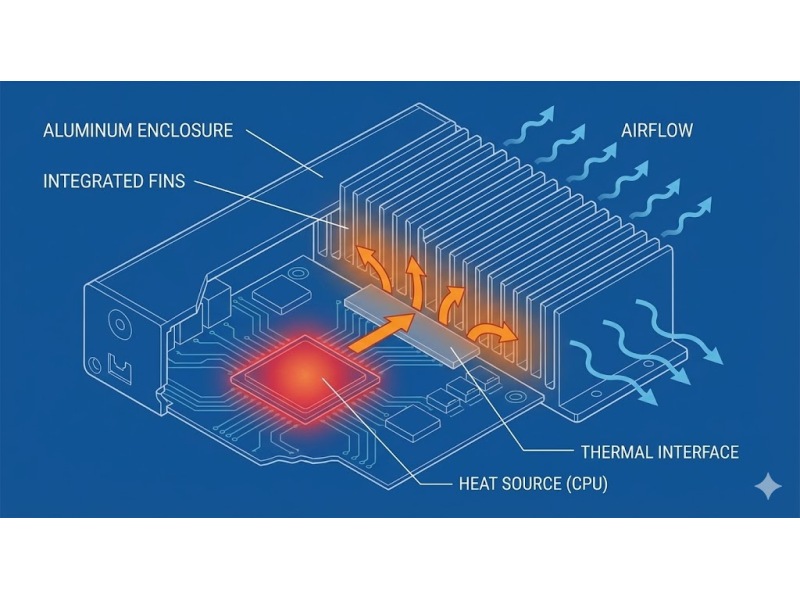
The Aluminum Solution: Just like in our IoT enclosures, the aluminum frame of an automotive display acts as a massive integrated heat sink. It pulls heat away from the processor and dissipates it into the vehicle's structural frame, ensuring the UI remains snappy and responsive.
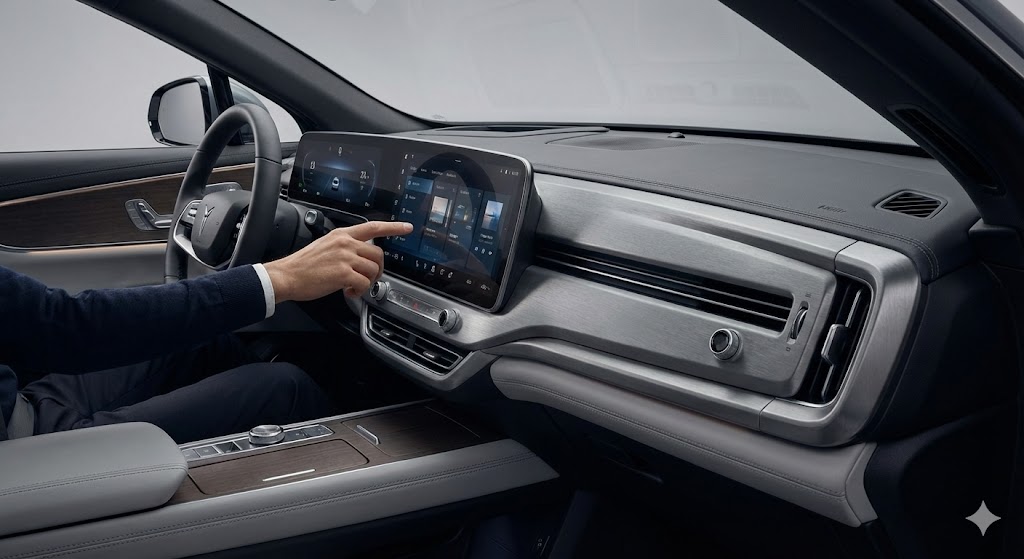
3. The Aesthetic of "Minimalist Luxury"
EV buyers—especially in the premium segment—expect a "tech-forward" feel that matches their smartphones and laptops.
Tactile Quality: When a driver adjusts a screen or touches the bezel, the cool, solid feel of anodized aluminum conveys a sense of quality that plastic simply cannot replicate.
Visual Harmony: Aluminum can be finished in a variety of textures—bead-blasted, brushed, or satin—that perfectly complement the leather, wood, and glass found in high-end electric vehicles.
4. Safety and Fragmentation
In the unfortunate event of a collision, the materials inside the cabin matter.
Impact Resistance: Unlike some brittle plastics that can shatter into sharp shards upon high-impact stress, aluminum is ductile. It tends to deform rather than shatter, which can contribute to a safer cabin environment.
Sustainability: EVs are marketed on their environmental credentials. Using infinitely recyclable aluminum for interior components aligns with the "Green" mission of the EV industry.
5. Precision Manufacturing for Seamless Integration
Automotive tolerances are notoriously strict. A gap of even 0.5mm in a dashboard is visible and unacceptable to luxury buyers.
Coboggi's Edge: Our ability to maintain ±0.01mm tolerances ensures that the aluminum screen housing fits perfectly into the dashboard assembly every time, eliminating squeaks, rattles, and unsightly gaps.
Conclusion: The Future is Metallic
The shift toward aluminum in the cockpit is more than just a trend—it is a functional necessity for the high-performance, high-luxury world of Electric Vehicles. By choosing aluminum, automotive OEMs are ensuring their interiors are as advanced as the batteries under the floor.
 English
 German
 French
 Russian
 Spanish
 Japanese
 Korean
 Khmer
Khmer Portuguese
 Ukrainian
 Arabic
 Italian
 Afrikaans
 Albanian
 Armenian
 Azerbaijani
 Basque
 Belarusian
 Bulgarian
 Catalan
 Croatian
 Czech
Czech Danish
 Dutch
Dutch Estonian
 Filipino
 Finnish
 Galician
 Georgian
 Greek
Greek Haitian Creole
 Hebrew
 Hindi
Hindi Hungarian
 Icelandic
 Indonesian
 Irish
Irish Latvian
 Lithuanian
 Macedonian
 Malay
Malay Maltese
 Norwegian
 Persian
 Polish
 Romanian
 Serbian
 Slovak
 Slovenian
 Swahili
 Swedish
 Thai
Thai Turkish
 Urdu
Urdu Vietnamese
 Welsh
Welsh Yiddish