

In high-end Consumer Electronics and Personal Care devices, status lights and indicators must be crisp.
There is nothing that cheapens a premium aluminum device faster than "blurry" light or glow leaking out from the seams of the USB port.
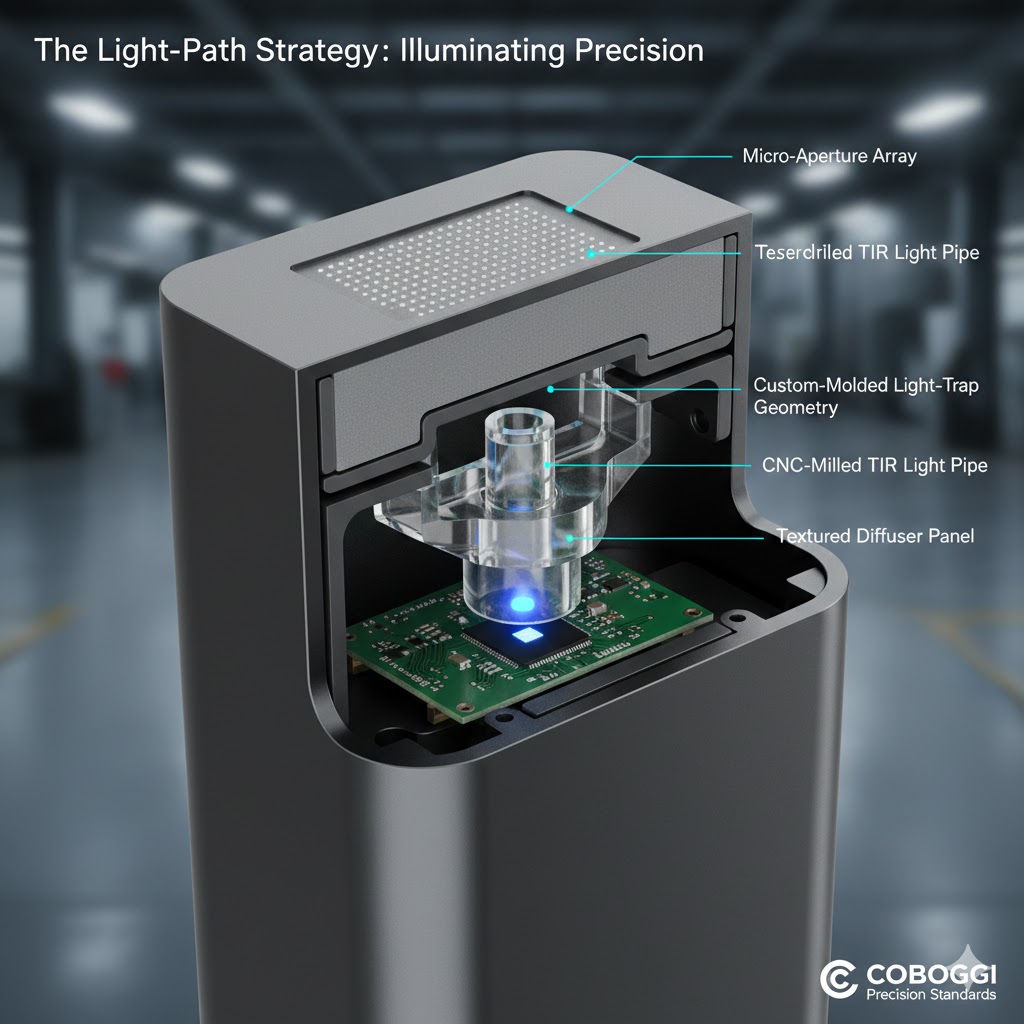
The Light-Path Strategy is about controlling every photon from the PCB to the user’s eye, using the aluminum enclosure as a structural "light-gate."
1. Micro-Aperture Drilling (The "Hidden-Until-Lit" Effect)
One of the most sophisticated ways to show status is to make the light appear as if it is shining directly through the metal.
The Tech: Using specialized CNC or laser drilling, we create a grid of microscopic holes (often 0.1mm or smaller) that are invisible to the naked eye when the LED is off.
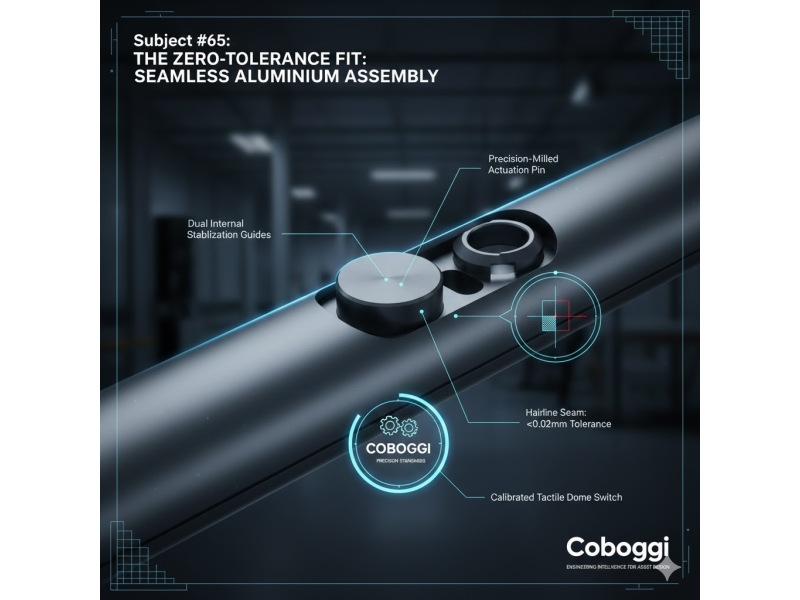
The Result: When the device wakes up, the light shines through the "solid" aluminum. This maintains the Zero-Tolerance Fit (#65) aesthetic while providing clear functional feedback.
2. Total Internal Reflection (TIR) Light Pipes
To move light from a deep-set PCB to the surface without losing brightness or clarity, we use custom-molded or machined "Light Pipes."
The Engineering: These clear acrylic or polycarbonate components are designed to snap into the aluminum housing with a Zero-Tolerance Fit.
Light Leak Prevention: We often "mask" the edges of these pipes or create a secondary "gasket" within the CNC pocket of the aluminum to ensure that light only exits where intended.
3. The "Light-Trap" Geometry
Aluminum’s reflective nature can actually work against you, causing internal "bounce" that makes one LED bleed into the neighbor’s indicator.
The Strategy: We mill specific "isolation chambers" or "baffles" directly into the internal side of the aluminum chassis.
The Benefit: Each LED sits in its own CNC-milled "room," ensuring that your "Battery Low" light doesn't accidentally illuminate your "Bluetooth Pairing" icon.
4. Material Harmony: Aluminum & Diffusion
The quality of light is just as important as the direction.
The Execution: We pair precision aluminum cutouts with frosted or bead-blasted diffusers.
The Haptic Connection: By matching the texture of the light diffuser to the Anodizing Standard (#61) of the metal, the transition between light and metal feels intentional and seamless.
Conclusion: Control the Glow
Light should be a scalpel, not a floodlight. By mastering the interaction between photons and precision-milled aluminum, Coboggi ensures that your product’s interface is as sharp and professional as its physical structure.
 English
 German
 French
 Russian
 Spanish
 Japanese
 Korean
 Khmer
Khmer Portuguese
 Ukrainian
 Arabic
 Italian
 Afrikaans
 Albanian
 Armenian
 Azerbaijani
 Basque
 Belarusian
 Bulgarian
 Catalan
 Croatian
 Czech
Czech Danish
 Dutch
Dutch Estonian
 Filipino
 Finnish
 Galician
 Georgian
 Greek
Greek Haitian Creole
 Hebrew
 Hindi
Hindi Hungarian
 Icelandic
 Indonesian
 Irish
Irish Latvian
 Lithuanian
 Macedonian
 Malay
Malay Maltese
 Norwegian
 Persian
 Polish
 Romanian
 Serbian
 Slovak
 Slovenian
 Swahili
 Swedish
 Thai
Thai Turkish
 Urdu
Urdu Vietnamese
 Welsh
Welsh Yiddish