

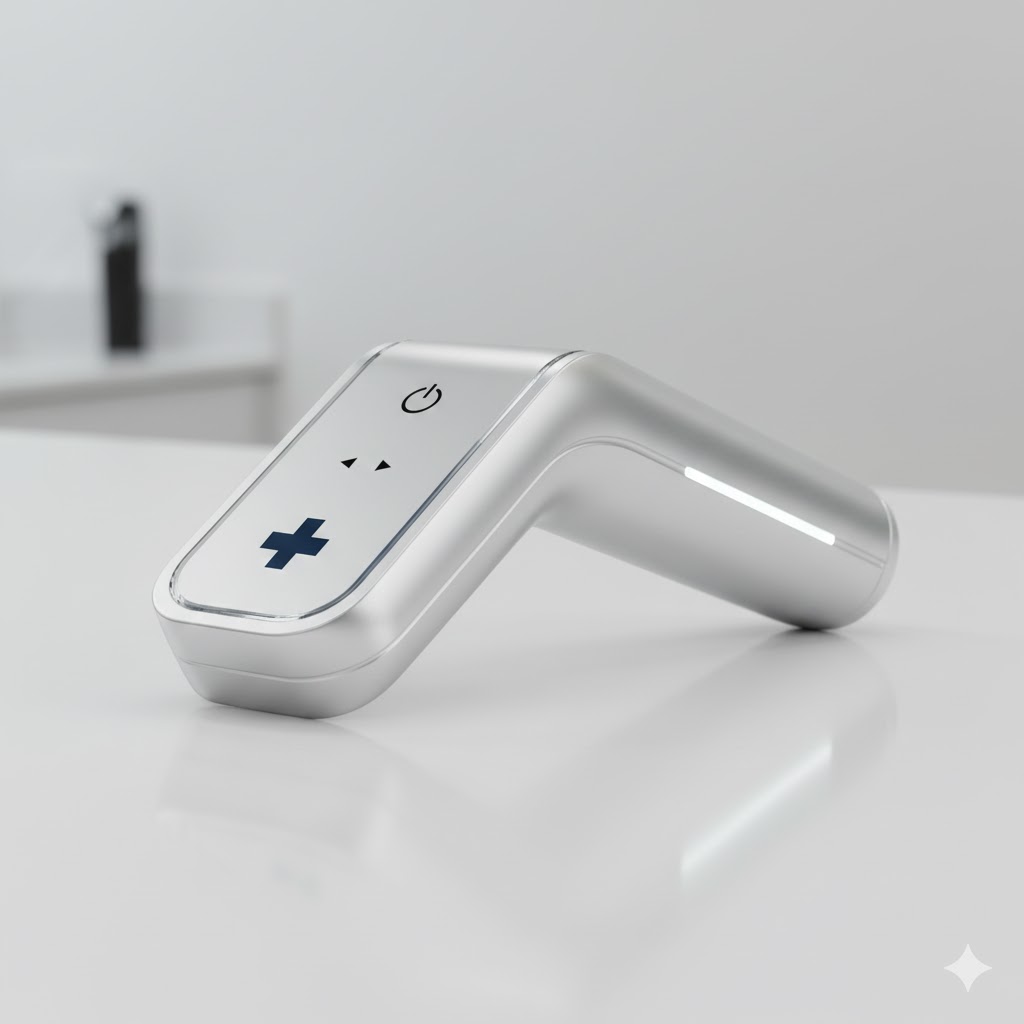
In the medical field, the "feel" of a device can influence a patient's perception of care. A plastic, flimsy-feeling diagnostic tool can cause anxiety; a solid, precision-machined aluminum device radiates professional reliability.
However, medical aluminum must do more than look good—it must survive the harshest cleaning cycles known to man. At Coboggi, we specialize in "Medical-Grade Resilience."
1. The Sterilization Challenge
Medical devices are subjected to constant wiping with 70% isopropyl alcohol, bleach, and quaternary ammonium. Standard finishes would peel or discolor within weeks.
Type III Hardcoat Anodizing involves creating a thicker and denser anodic layer, ranging from 25µm to 50µm, which forms a non-porous shield against corrosive chemicals. This process is utilized for surgical instruments and hospital-grade handheld devices
Chemical Resistance: Our sealing process ensures that the dyes are locked so deeply within the aluminum that they won't leach out during high-temperature autoclave cycles.
2. "Calm Design" Aesthetics
Medical technology is moving out of the hospital and into the home (wellness wearables, portable EKGs, skin-care lasers). This requires a shift in aesthetics.
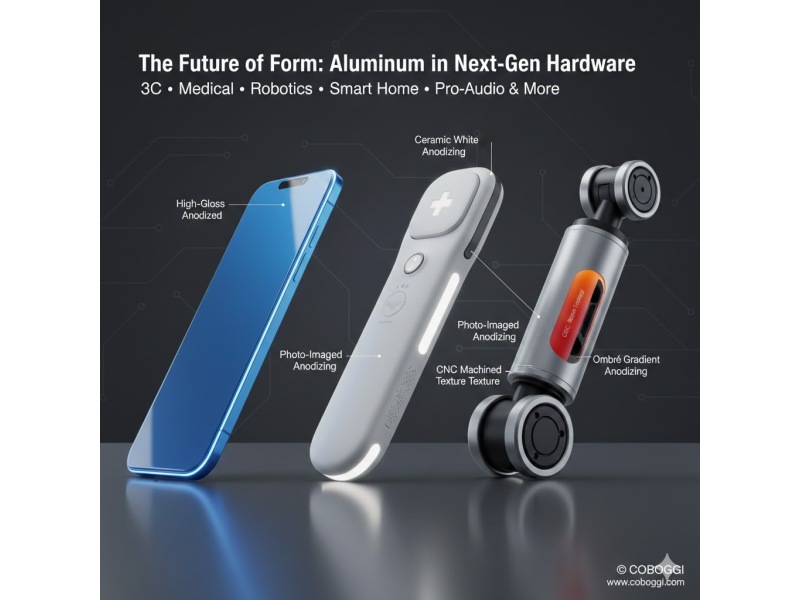
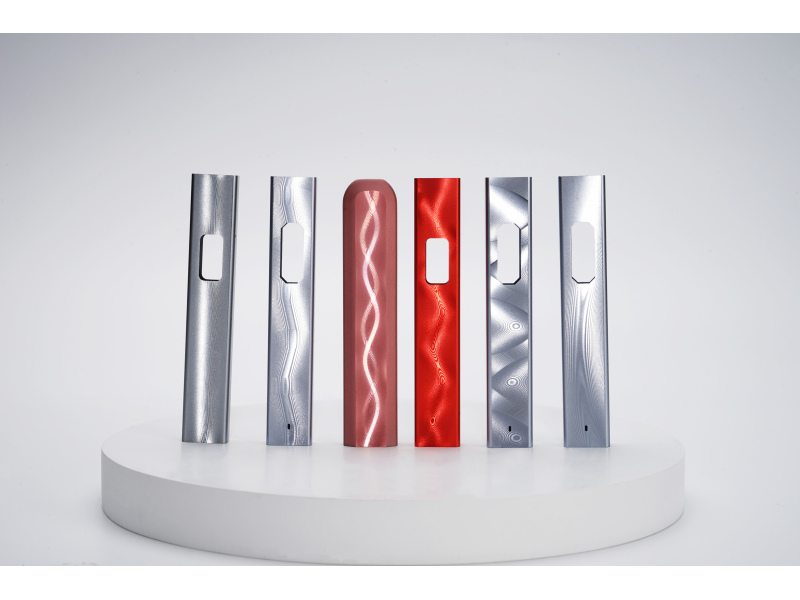
The "Soft-Metal" Palette: We move away from aggressive "Gamer" colors toward soft silvers, champagne golds, and "Medical White" (achieved through specialized ceramic-like coatings over aluminum).
Radiused Edges: We use 5-axis CNC machining to ensure there are no sharp corners where bacteria can hide, and no jagged edges that could irritate sensitive skin.
3. Weight as a Functional Benefit
For a surgeon performing a 4-hour procedure or a nurse carrying a tablet all day, every gram matters.
Structural Thinning: We use FEA (Finite Element Analysis) to remove material from the inside of the handle where it isn't needed, creating "skeletonized" aluminum structures that are as light as plastic but as rigid as steel.
Ergonomic Balance: By 3D-milling the internal cavities, we can shift the center of gravity of a handheld device to perfectly fit the user's palm, reducing fatigue.
4. Biocompatibility & Safety
Devices that come into contact with human skin must be non-toxic and non-allergenic.
Lead-Free Alloys: We strictly use medical-compliant 6061 or 6063 alloys with certified material traces.
Nickel-Free Sealing: Many cheap anodizing processes use nickel acetate to seal pores. At Coboggi, we use hot-water or metal-free seals to ensure our surfaces are 100% safe for prolonged skin contact.
5. Applications: Where Precision Saves Lives
Portable Ultrasounds: Rugged aluminum frames that protect sensitive sensors from drops.
Insulin Pumps & Wearables: Ultra-miniature CNC parts that require "Zero-Failure" tolerances.
Dermatology Lasers: High-thermal conductivity aluminum heads that keep the device cool during skin treatments.
Conclusion: The Material of Modern Medicine
Portable medical tech requires a balance of "Hard Performance" and "Soft Humanism." Aluminum is the only material that offers the strength of a surgical tool with the premium feel of a consumer product. At Coboggi, we build the hardware that doctors and patients trust.
 English
 German
 French
 Russian
 Spanish
 Japanese
 Korean
 Khmer
Khmer Portuguese
 Ukrainian
 Arabic
 Italian
 Afrikaans
 Albanian
 Armenian
 Azerbaijani
 Basque
 Belarusian
 Bulgarian
 Catalan
 Croatian
 Czech
Czech Danish
 Dutch
Dutch Estonian
 Filipino
 Finnish
 Galician
 Georgian
 Greek
Greek Haitian Creole
 Hebrew
 Hindi
Hindi Hungarian
 Icelandic
 Indonesian
 Irish
Irish Latvian
 Lithuanian
 Macedonian
 Malay
Malay Maltese
 Norwegian
 Persian
 Polish
 Romanian
 Serbian
 Slovak
 Slovenian
 Swahili
 Swedish
 Thai
Thai Turkish
 Urdu
Urdu Vietnamese
 Welsh
Welsh Yiddish