

Engineering for space is the ultimate test of "The Coboggi Way." In a vacuum, materials behave differently.
Lubricants evaporate, plastics "outgas" and fog up lenses, and heat cannot be carried away by air.
Aluminum remains the backbone of space exploration because it doesn't just survive these conditions—it thrives in them. For the "New Space" era, where civilians carry tech into orbit, we bring Satellite-Level Engineering to the palm of your hand.
1. Outgassing & Vacuum Stability
In the vacuum of space, standard plastics and adhesives release "volatiles" (gases). These gases condense on sensors and lenses, ruining 10,000 optics.
Zero-Outgas Assemblies: Our CNC-machined aluminum components are "Total Mass Loss" (TML) compliant. We use mechanical interference fits instead of glues, ensuring the device remains stable and the optics remain clear, even in a hard vacuum.
Dry-Film Lubrication: For moving parts like lens rings or buttons, we use specialized coatings over the aluminum that provide smooth motion without liquid oils.
2. Managing the 300℃ Swing
A device in orbit can go from 120°C in direct sunlight to -170°C in the shadow of the Earth in minutes.
CTE (Coefficient of Thermal Expansion) Matching: We use specific 7000-series alloys that expand and contract at predictable rates, ensuring that the internal electronics aren't crushed or pulled apart during rapid thermal cycling.
High-Emissivity Finishes: Our specialized "Space-Black" anodizing is designed to radiate heat away from the device through infrared emission, the only way to cool electronics in the absence of air.
3. Radiation Hardening & Shielding
Beyond the atmosphere, high-energy particles can flip bits in a processor or degrade sensors.
Structural Shielding: While aluminum can't block all radiation, our "Thick-Wall CNC" approach allows us to create aluminum "vaults" for the most sensitive chips, providing a significant layer of physical defense against cosmic rays.
7075-T6 Structural Integrity: This alloy, often used in rocket fuselages, provides the highest strength-to-weight ratio available, protecting the device from the violent G-forces of a launch.
4. The "Astronaut-Interface" Design
If a creator is wearing pressurized gloves or operating in microgravity, the UI must change.
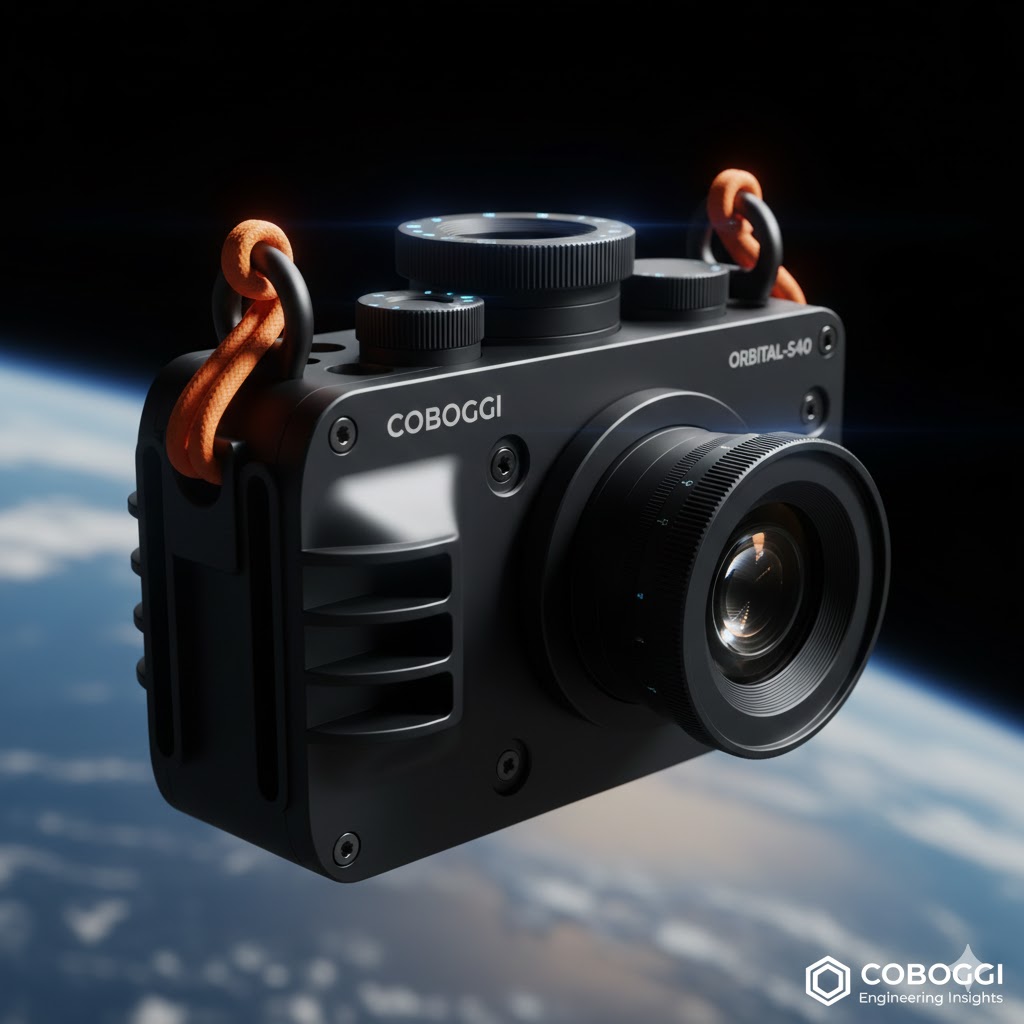
High-Tactility Oversized Controls: We machine oversized, deep-knurled aluminum dials that can be operated by gloved hands, providing "Positive-Lock" feedback so the user knows exactly when a command is registered.
Tether-Point Integration: Every space-grade device requires a "Zero-G" tether point. We mill these directly into the chassis, ensuring the device won't drift away—and that the point won't snap under tension.
5. Applications: The Next Giant Leap
Orbital Cameras: Aluminum housings that keep sensors cool and lenses aligned in a vacuum.
Space-Tourism Wearables: Biometric monitors that withstand the pressure changes of cabin decompression.
Satellite Communicators: Ruggedized aluminum frames for handheld devices that link directly to LEO (Low Earth Orbit) constellations.
Conclusion: Beyond Earth, Built by Coboggi
The transition from "Earth-bound" to "Space-grade" is the final evolution of a product. It requires a material that is as light as a feather and as tough as a rocket. At Coboggi, we are proud to provide the aluminum engineering that allows humanity to take its technology into the stars.
 English
 German
 French
 Russian
 Spanish
 Japanese
 Korean
 Khmer
Khmer Portuguese
 Ukrainian
 Arabic
 Italian
 Afrikaans
 Albanian
 Armenian
 Azerbaijani
 Basque
 Belarusian
 Bulgarian
 Catalan
 Croatian
 Czech
Czech Danish
 Dutch
Dutch Estonian
 Filipino
 Finnish
 Galician
 Georgian
 Greek
Greek Haitian Creole
 Hebrew
 Hindi
Hindi Hungarian
 Icelandic
 Indonesian
 Irish
Irish Latvian
 Lithuanian
 Macedonian
 Malay
Malay Maltese
 Norwegian
 Persian
 Polish
 Romanian
 Serbian
 Slovak
 Slovenian
 Swahili
 Swedish
 Thai
Thai Turkish
 Urdu
Urdu Vietnamese
 Welsh
Welsh Yiddish